
Managing your pet’s daily needs while juggling work, errands, and personal time can feel overwhelming. Missed feeding times, lost pets during walks, and uncertainty about your pet’s health create constant worry for owners across Greece. Smart pet gadgets offer practical solutions to these challenges through automation, real-time monitoring, and data-driven insights. This guide walks you through understanding, selecting, and effectively using innovative pet technology to transform how you care for your furry companions in 2026.
Table of Contents
- Understanding Essential Pet Gadgets And Their Roles
- Preparing To Use Pet Gadgets: What You Need And Key Considerations
- Step-By-Step Guide To Using Smart Feeders And Activity Trackers Effectively
- Using Gps Trackers And Troubleshooting Common Issues
- Explore Top Pet Gadgets At Asknik.gr
Key takeaways
| Point | Details |
|---|---|
| GPS trackers boost recovery | Real-time location tracking improves lost pet recovery rates by 30-40% compared to traditional methods. |
| Smart feeders control weight | Automated portion management reduces food intake by 15-20%, helping maintain healthy pet weight. |
| Activity monitors detect illness | Tracking exercise and sleep patterns enables early identification of potential health problems. |
| AI sensors prevent errors | Multi-sensor fusion with local processing minimizes false food dispensing in smart feeders. |
| Virtual fences enhance safety | GPS boundary alerts notify owners immediately when pets leave designated safe zones. |
Understanding essential pet gadgets and their roles
Smart pet technology has evolved beyond simple toys into sophisticated care systems that address specific daily challenges. Three primary gadget categories dominate the market, each solving distinct problems that pet owners face.
GPS tracking collars provide real-time location updates through cellular or satellite networks. These devices have transformed pet recovery, with GPS trackers improving recovery rates by 30-40% compared to traditional ID tags alone. When your dog slips through an open gate or your cat wanders too far during outdoor time, GPS collars send instant alerts to your smartphone with precise coordinates.
Smart feeders revolutionize meal management through programmable schedules and precise portion dispensing. Research shows that automated portion control reduces food intake by 15-20%, directly addressing pet obesity concerns. These devices eliminate guesswork from feeding routines, ensuring your pet receives consistent nutrition even when you’re stuck in traffic or working late hours.
Activity trackers monitor movement patterns, sleep quality, and calorie expenditure throughout the day. Studies confirm that activity tracking provides health insights enabling early illness detection, giving you advance warning when behavior changes signal potential problems. A sudden drop in activity or disrupted sleep patterns often indicates issues before visible symptoms appear.
Each gadget category targets specific aspects of pet wellness:
- GPS trackers focus on location security and escape prevention
- Smart feeders address nutrition consistency and weight management
- Activity monitors provide behavioral and health trend analysis
- Combined systems offer comprehensive care oversight
Choosing the right combination depends on your pet’s specific needs and your lifestyle constraints. Outdoor cats benefit most from GPS tracking, while dogs prone to obesity need smart feeding solutions. For comprehensive insights into available options, explore our guide to smart pet accessories covering features and selection criteria.
Preparing to use pet gadgets: what you need and key considerations
Successful gadget implementation requires proper planning before you unbox any device. Your home infrastructure, pet characteristics, and feature priorities all influence which products will work effectively.
Network connectivity forms the foundation for most smart pet devices. WiFi-enabled gadgets offer unlimited range within your home network but require stable internet access. Bluetooth devices work offline with shorter range, typically 30-50 meters. Research indicates that WiFi provides unlimited range with network dependency while Bluetooth offers shorter range with offline functionality. Assess your home’s WiFi coverage strength in areas where you’ll place feeders or activity tracking stations.
Pet-specific compatibility factors include:
- Size and weight restrictions for collar-mounted devices
- Breed-specific features like waterproofing for water-loving dogs
- Multi-pet household capabilities requiring individual recognition
- Age appropriateness, especially for senior pets with mobility issues
Feature prioritization helps narrow your options among dozens of similar products. Smart feeders vary dramatically in capabilities and reliability. Consider these critical specifications:
| Feature Category | Basic Option | Advanced Option |
|---|---|---|
| Portion Control | Manual pre-set amounts | AI-adjusted based on activity |
| Pet Recognition | Single pet only | Multi-pet facial recognition |
| Power Backup | AC power only | Battery backup included |
| Sensor Type | PIR motion only | Multi-sensor fusion |
| Connectivity | Bluetooth only | WiFi plus cellular backup |
Battery life deserves special attention for GPS trackers. Devices with 3-5 day battery life require frequent charging, while premium models last 2-3 weeks. Calculate whether daily charging fits your routine or if extended battery life justifies higher costs.
Pro Tip: Update all gadget firmware immediately after unboxing and enable automatic updates in device settings. Manufacturers regularly patch security vulnerabilities and improve recognition algorithms, with updates often fixing bugs that cause feeding errors or tracking glitches.
Gather these items before starting setup:
- Smartphone with updated operating system
- Manufacturer apps downloaded and accounts created
- Device manuals and quick start guides
- Measuring tools for accurate initial portion calibration
- Backup power sources for critical devices
For a comprehensive preparation checklist covering all setup phases, review our pet gadget checklist steps with detailed verification points.
Step-by-step guide to using smart feeders and activity trackers effectively
Proper setup and calibration determine whether your gadgets deliver promised benefits or create new frustrations. Follow these systematic steps for reliable operation.
-
Position your smart feeder on a stable, level surface near a power outlet. Avoid direct sunlight, which can spoil food, and high-traffic areas where pets might knock the unit over. Ensure adequate clearance around the dispenser opening for your pet to eat comfortably without crowding.
-
Connect the feeder to your home network following manufacturer instructions. Download the official app, create an account, and pair the device using the provided QR code or manual pairing mode. Test connectivity by triggering a manual dispense from the app to confirm commands reach the feeder reliably.
-
Program feeding schedules based on your veterinarian’s recommendations for meal frequency and portion sizes. Most pets thrive on 2-3 scheduled meals daily rather than free feeding. Input your pet’s current weight, target weight, and activity level so the app can calculate appropriate portions. Start with conservative amounts and adjust based on your pet’s response over two weeks.
-
Calibrate activity tracker fit by ensuring the collar or harness sits snugly without restricting movement or breathing. The sensor should contact your pet’s body consistently for accurate readings. Sync the tracker with its companion health app and establish baseline activity levels by monitoring for 5-7 days before making care adjustments.
-
Monitor data trends weekly rather than obsessing over daily fluctuations. Look for persistent changes in activity levels, feeding enthusiasm, or sleep patterns that span multiple days. Adjust portion sizes gradually in 5-10% increments when weight management becomes necessary, giving your pet’s metabolism time to adapt.
AI-powered feeders require special attention during initial setup. Studies show that AI feeders need multi-sensor fusion and local processing for accurate pet recognition to avoid false triggers. Spend time training the recognition system by having each pet approach the feeder multiple times from different angles while you verify correct identification in the app.
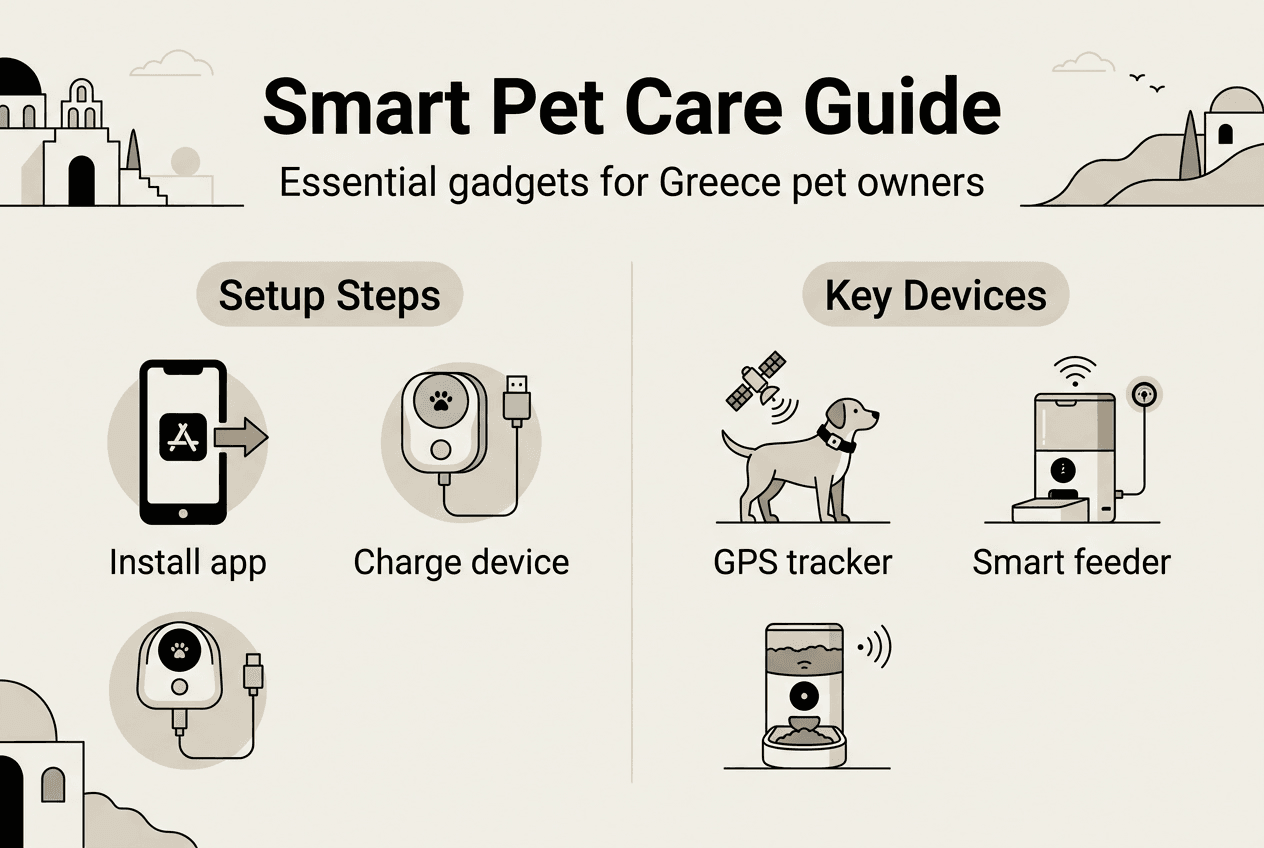
Pro Tip: Test AI feeder recognition zones thoroughly before leaving pets unsupervised by walking past the unit yourself, having family members approach it, and observing whether the system incorrectly dispenses food. Adjust sensor sensitivity and recognition thresholds until only your registered pets trigger feeding.
For detailed feature comparisons and setup optimization, check out our automatic pet feeder features guide covering advanced configuration options.
Using GPS trackers and troubleshooting common issues
GPS tracking collars provide peace of mind but require proper configuration to function reliably when you need them most. Understanding their capabilities and limitations prevents false security.
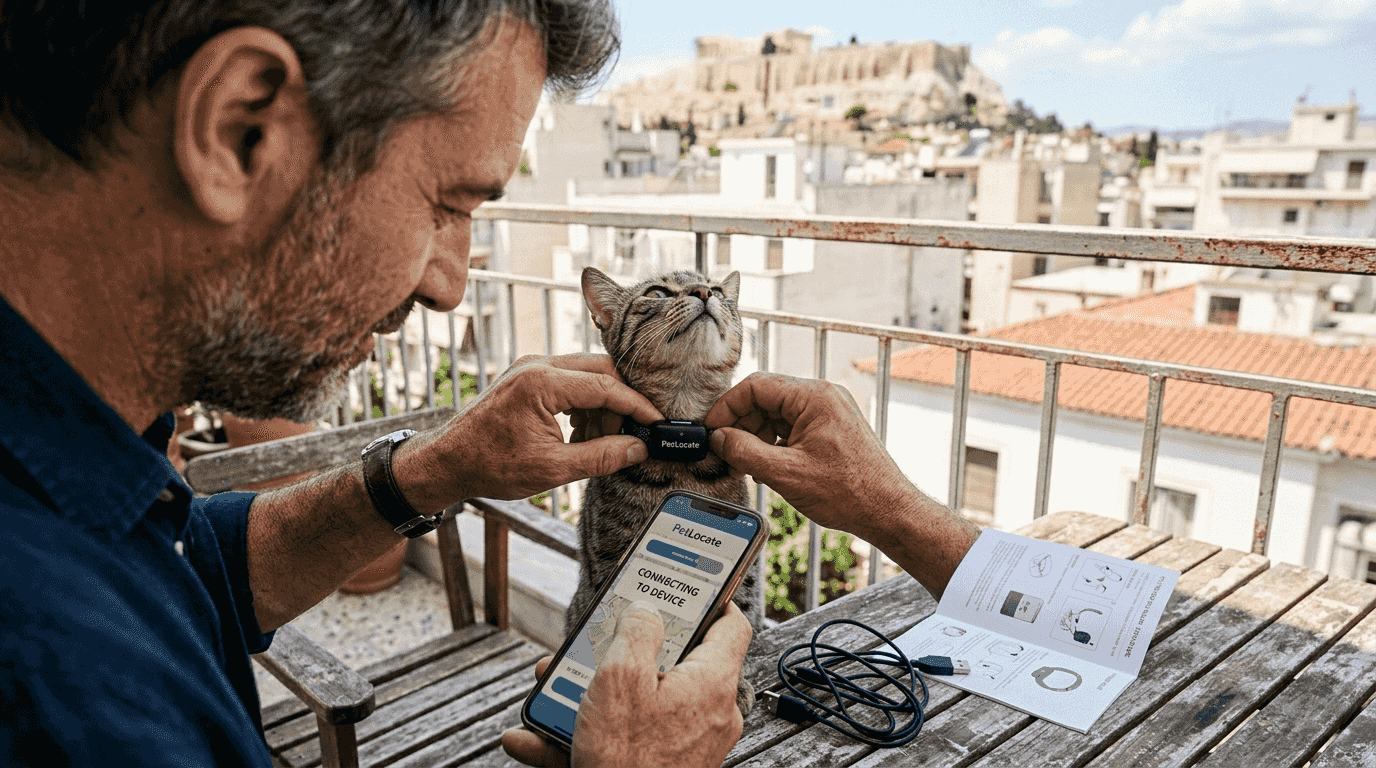
Virtual fence setup creates invisible boundaries that trigger alerts when your pet crosses designated perimeters. Draw safe zones around your property in the companion app, adjusting boundary sizes to account for GPS accuracy variations of 5-10 meters. Set up multiple zones for different locations like your home, a vacation property, or a relative’s house where your pet visits regularly.
Charging and syncing routines determine whether your tracker works during emergencies. Establish a consistent charging schedule, ideally every 3-5 days for most models, and verify sync status daily. Enable low battery alerts so you receive warnings before power runs out. Keep a backup collar with traditional ID tags as a failsafe during charging periods.
Comparison of tracking methods reveals significant differences:
| Method | Recovery Time | Range | Real-Time Updates | Cost |
|---|---|---|---|---|
| GPS Tracker | 60% faster | Unlimited | Yes | $50-150 + subscription |
| Traditional ID Tag | Baseline | Requires finder | No | $5-15 |
| Microchip | Moderate | Requires scanner | No | $25-50 one-time |
Research confirms that GPS trackers reduce recovery time by 60% compared to relying solely on ID tags or microchips, which require someone to physically find and scan your pet.
Common problems and solutions include:
- Signal loss in dense urban areas: Switch to trackers with cellular backup or hybrid GPS/cellular technology
- Rapid battery drain: Reduce update frequency from real-time to 5-minute intervals when not actively tracking
- Inaccurate locations: Ensure clear sky view and allow 2-3 minutes for GPS lock after powering on
- Water damage: Verify IP67 or higher waterproof rating for pets that swim or play in water
Test your tracker’s effective range by walking progressively farther from home while monitoring signal strength and update reliability. Note dead zones where buildings or terrain block signals so you understand coverage limitations in your neighborhood.
For comprehensive guidance on maximizing gadget effectiveness, explore our article on improvements with smart pet gadgets detailing real-world performance gains.
Explore top pet gadgets at Asknik.gr
Transforming your pet care routine starts with choosing reliable, innovative technology designed for real-world use. Asknik.gr offers carefully selected smart pet solutions that Greek pet owners trust for daily convenience and peace of mind.

Our automatic pet feeder smart dispenser features programmable schedules, precise portion control, and stainless steel bowls that resist bacteria buildup. Whether you’re managing weight or maintaining consistent meal times, this feeder adapts to your pet’s unique needs.
Beyond pet-specific gadgets, we provide complementary tools like our folding measuring spoon tool for accurate food portioning when preparing homemade pet meals or supplements.
Visit Asknik.gr to browse our complete pet accessory collection, take advantage of free shipping across Greece, and access expert customer support for setup assistance. Every product comes backed by our commitment to quality and customer satisfaction.
FAQ
What is the best type of sensor for an AI pet feeder?
Multi-sensor fusion combining cameras, weight sensors, and local AI processing delivers the most accurate pet recognition. Research confirms that effective AI feeders require multi-sensor systems with on-device processing rather than simple PIR motion sensors. Single-sensor feeders frequently dispense food when humans or other pets walk past, wasting food and disrupting feeding schedules. Look for feeders explicitly advertising facial recognition or multi-pet identification capabilities.
How do GPS trackers improve pet safety in Greece?
GPS trackers provide real-time location updates that reduce recovery time by 60% compared to traditional methods like ID tags or microchips. Virtual fence features alert you instantly when pets leave designated safe zones, enabling immediate response before they wander into traffic or unfamiliar areas. This technology proves especially valuable in Greece’s mix of urban centers and rural areas where pets can quickly move beyond visual range.
Can smart feeders help with pet weight management?
Automated portion control through smart feeders demonstrably improves weight management outcomes. Studies show that portion automation reduces food intake by 15-20% by eliminating overfeeding and maintaining consistent meal schedules. Smart feeders remove guesswork and emotional feeding decisions that often lead to obesity. Combined with activity tracker data, you can adjust portions precisely based on your pet’s actual energy expenditure rather than estimated needs.
How often should I charge GPS tracking collars?
Charging frequency depends on your tracker’s battery capacity and update interval settings. Most GPS collars require charging every 3-7 days with standard settings. Real-time tracking mode drains batteries faster, sometimes requiring daily charging, while power-saving modes with 5-10 minute update intervals extend life to 2-3 weeks. Establish a consistent charging routine and enable low battery alerts to prevent power loss during critical moments. Keep traditional ID tags as backup during charging periods.