


Is a Portable Electric Juicer Worth Daily Use?

Table of Contents
- Is a Portable Electric Juicer Worth It for Daily Use?
- Portable Blender vs Regular Blender: Which Fits Your Routine?
- Battery Life and Charging: How Many Blends Per Day?
- Motor Power and Performance: What Can It Actually Handle?
- Portable Blender for Frozen Fruit: Real Limits and Workarounds
- How to Clean a Portable Blender: Daily Maintenance Made Simple
- The Real Cost of Daily Use: What You'll Actually Spend
- Conclusion: Is It Right for Your Lifestyle?
- Frequently Asked Questions
Last Updated: October 11, 2026
Is a Portable Electric Juicer Worth It for Daily Use?
A portable electric juicer can absolutely be worth it for daily use, but only if you match it to your actual routine and expectations. The real question isn't whether portable electric juicers work, they do. It's whether the trade-offs align with how you actually live.

Here's what we've learned: most people overestimate how often they'll use a portable device and underestimate how much convenience matters. If you're commuting to the gym, traveling frequently, or genuinely making smoothies multiple times daily, a portable electric juicer can be transformative. If you're thinking about it as a "nice to have" that sits in a drawer, you'll regret the purchase.
The decision comes down to three things: your actual daily routine, what you're willing to clean, and how much you're prepared to spend on something that's genuinely useful but has real limitations.
Portable Blender vs Regular Blender: Which Fits Your Routine?
A portable electric juicer is a convenience device for single servings on the go, fundamentally different from a powerful countertop blender built for high-volume blending.

The portable electric juicer wins on portability, toss it in a gym bag or blend at the office. The trade-off is power: most portable models reach 10,000-14,000 RPM versus 30,000+ RPM for countertop blenders, which matters with tough ingredients.
A portable electric juicer handles soft fruits, leafy greens, and yogurt smoothies easily. With frozen fruit, ice, or hard vegetables, the motor works harder and takes longer; some models struggle with ice entirely.
Choose a portable electric juicer for smoothies away from home; choose a regular blender for home use with maximum power. Many people own both, they serve different purposes.
Battery Life and Charging: How Many Blends Per Day?
Battery life reveals real-world limitations. Most portable models advertise capacity in mAh, but that number needs context.
A typical portable blender with 2,000-2,500 mAh capacity gives roughly 8-12 blends per charge. A single 60-second blend uses 10-15% of battery; softer ingredients use less than frozen fruit or ice.
USB charging models typically need 2-3 hours for a full charge. If making smoothies twice daily while traveling, charge nightly or carry a portable power bank.
A portable electric juicer works well for daily home use with overnight charging or weekend trips with one or two smoothies daily. Extended travel without charging access creates battery anxiety.
Motor Power and Performance: What Can It Actually Handle?
Motor power in a portable electric juicer, measured in watts, determines what you can blend. Most portable models range from 200W to 500W versus 1000W+ for countertop blenders.
Higher wattage means faster blending and better handling of tough ingredients. A 500W portable juicer blends soft fruit, yogurt, and greens easily; it handles ice but works harder, and struggles with dense vegetables unless cut small.
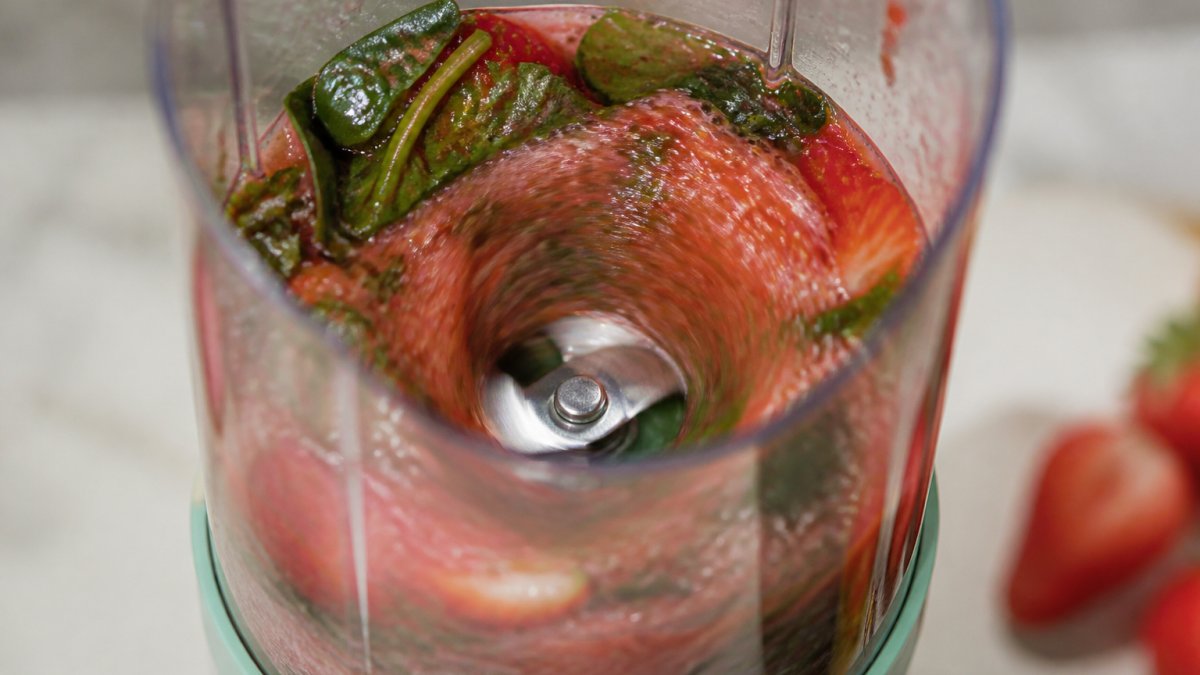
For daily use, a 300-400W motor is the practical sweet spot. The portable electric juicer reaches 500W, handling tougher blending tasks better than entry-level models.
Motor consistency matters more than raw wattage. Cheaper models use lower-quality motors that lose power as they heat up.
Portable Blender for Frozen Fruit: Real Limits and Workarounds
Frozen fruit reveals portable blenders' honest limitations.
Why frozen fruit is hard on portable motors: Blending frozen fruit requires breaking ice crystals. A countertop blender (1000W+) does this in 30-45 seconds; a portable blender (300-500W) has one-third the power and must work three times harder, causing:
- Motor strain and faster heating, reducing lifespan
- Battery drain of 20-30% per blend versus 10-15% for soft fruit
- Higher-pitched, strained motor noise
- 2-3 minutes to blend frozen berries versus 30 seconds, with grainier results
Blending versus juice extraction: Portable devices marketed as "juicers" are actually blenders that pulverize whole fruit, not true juice extractors. A blender produces a chunky, icy smoothie with visible pulp; a true juicer extracts only liquid. Most portable devices can't do the latter, so frozen fruit will disappoint if you expect juice-like smoothness.
Real-world performance with frozen ingredients:
- Frozen berries: Blend in 2-3 minutes, slightly grainier than fresh
- Frozen mango: Struggles, takes 3-4 minutes, chunky result; not recommended daily
- Ice cubes: Most models cannot reliably crush ice; use frozen fruit instead
- Frozen banana: Blends well in 1-2 minutes; one of the best frozen ingredients
Workarounds that work:
- Cut frozen fruit smaller, reduces motor load 40-50%
- Blend frozen fruit with liquid first to reduce motor load
- Use 50/50 frozen and fresh fruit mix
- Skip ice; use frozen fruit to chill instead
- Pre-chill liquid to get cold smoothies without frozen ingredients
- Blend in stages for large batches rather than overloading the motor
When frozen fruit becomes a problem: Daily frozen smoothie bowls or thick açai drinks frustrate portable juicers; the motor works too hard and results are inconsistent. Occasionally blending frozen berries into yogurt smoothies works fine, frozen fruit as a minority ingredient, not the base.
Φορητός Ηλεκτρικός Αποχυμωτής - Πολυλειτουργικό Μπλέντερ Κουζίνας →
How to Clean a Portable Blender: Daily Maintenance Made Simple
Cleaning is the part that determines whether a portable blender stays useful or becomes a chore you avoid. A portable electric juicer is only convenient if cleaning it doesn't take 15 minutes.
The fast method: add warm water and a drop of dish soap to the blender, run it for 30 seconds, rinse, and dry. This works for most smoothie residue and takes less than a minute.
The thorough method: disassemble the blade assembly (most models have removable blades), rinse each part under running water, and wipe dry. The blade assembly should never go in the dishwasher, the motor base definitely shouldn't.
The maintenance that matters: check the blade assembly monthly for dullness or damage. A dull blade works harder and drains battery faster. Replace it if you notice decreased blending performance. Keep the charging port clean and dry, lint or moisture here causes charging problems.
The Real Cost of Daily Use: What You'll Actually Spend
A portable electric juicer costs between €36.99 and €56.99 for a quality model from Asknik. That's the entry point.
Purchase and replacement costs: The blade assembly wears out. If you're blending daily with tough ingredients, you're replacing blades roughly every 12-18 months. That's €10-15 per replacement. The battery eventually degrades.
Ingredient costs, the real variable: This is where most people underestimate the true cost. A typical daily smoothie uses:
- 1 banana (€0.15-0.25)
- 1 cup frozen berries (€0.40-0.60)
- 1 cup yogurt or milk (€0.20-0.40)
- Optional protein powder or nut butter (€0.30-0.60)
Total per smoothie: €1.05-1.85 in ingredients. If you're making one smoothie daily, that's €380-675 per year in groceries alone. A café smoothie costs €5-7, so you're saving €3-6 per drink by blending at home, but only if you actually use the device daily.
The break-even calculation: If you use a portable electric juicer daily for two years, your total cost is roughly €75-100 (device + one blade replacement + one battery replacement) plus €760-1,350 in ingredients.
Compare that to buying a single smoothie from a café (€5-7), and the math is clear: daily home blending saves €3-5 per drink. Over a year of daily use, that's €1,095-1,825 in savings.
Where the math breaks down: The cost-value calculation changes dramatically if you're not actually using it daily. Here's the honest breakdown:
- Daily use (5+ times per week): €1.15-2.00 per smoothie. Strong financial case. The device pays for itself in 2-3 months.
- 3-4 times per week: €1.50-2.50 per smoothie. Modest savings, but the device takes 4-6 months to pay for itself. Still worthwhile if you're consistent.
- 1-2 times per week: €2.50-4.00 per smoothie. You're approaching café prices without the convenience of someone else handling cleanup. The financial case is weak.
- Occasional use (fewer than 4 times per month): €4.00-6.00+ per smoothie. You're paying more per drink than a café charges, and the device is gathering dust between uses. Not worth it.
The critical threshold is consistency.
Hidden costs to factor in:
- Time spent shopping for fresh fruit and yogurt (€0 in direct cost, but real in effort)
- Occasional spoilage if you buy in bulk and don't use ingredients before they expire
- Replacement cups or lids if you lose or damage them (€5-10 each)
- A portable power bank if you're traveling and want to charge without finding an outlet (€15-30)
Conclusion: Is It Right for Your Lifestyle?
A portable electric juicer is worth buying for daily use if three conditions are true: you actually use it daily, you don't mind the blending limitations with frozen ingredients, and you're willing to charge it regularly.
If your routine involves commuting, traveling, or making smoothies away from home, a portable electric juicer solves a real problem. If you primarily blend at home and want maximum power, a regular blender is the better choice.
At Asknik, we recommend starting with the Φορητό Μπλέντερ με USB Φόρτιση if portability and USB charging matter to you, or the Φορητός Ηλεκτρικός Αποχυμωτής - Πολυλειτουργικό Μπλέντερ Κουζίνας if you want maximum motor power and capacity. Both handle daily smoothie routines without complaint. The key is matching the device to your actual lifestyle, not your ideal lifestyle. Get started with a portable electric juicer that fits your routine, and you'll have a genuinely useful tool that pays for itself within months.
Frequently Asked Questions
Are portable electric juicers powerful enough for daily use?
Most portable electric juicers reach 14,000 RPM or higher, which handles soft fruits, vegetables, and smoothies well. However, they struggle with ice and hard frozen ingredients. For daily leafy greens, berries, and yogurt-based smoothies, they deliver adequate performance. If your routine focuses on pre-cut soft produce, a portable electric juicer meets daily demands. Models like the USB-rechargeable portable blender at Asknik offer 14,000 RPM for consistent blending of standard ingredients.
Can a portable juicer crush ice or frozen fruit?
Most portable blenders cannot crush ice effectively. Their motors are designed for soft ingredients, not hard frozen materials. Frozen fruit requires thawing first or blending with liquid to reduce strain. If ice-crushing is essential to your routine, a full-size countertop blender is more reliable. For daily use without ice, portable models work fine. Always check the manufacturer's specifications before attempting frozen ingredients.
How many times can you use a portable juicer before recharging?
Battery capacity varies by model. Most portable blenders deliver 3-5 full blends per single charge, depending on blend duration and motor strain. USB-rechargeable models typically charge fully in 2-3 hours. If you blend once daily, one charge lasts several days. Heavy daily users blending 3+ times may need to charge every day or every other day. Check the mAh rating and expected blend count in the product specifications before purchasing.
Are portable blenders easy to clean after daily use?
Portable blenders are easier to clean than full-size models because of their compact size. Most have detachable blades and smaller containers. Fill halfway with warm water and a drop of dish soap, blend for 10-15 seconds, then rinse thoroughly. Hand-washing is recommended over dishwashers to preserve the motor and battery. Dry all components completely before storage. Daily cleaning takes 2-3 minutes, making maintenance practical for regular use.
A portable electric juicer only stays useful if it matches your actual daily habits. The best model is the one you'll actually use and clean regularly. Choose based on your real routine, not aspirational plans, and you'll make the right decision.