
Picking the right smart gadgets for your home sounds exciting until you’re staring at a wall of incompatible devices, confusing apps, and three different platforms that refuse to talk to each other. Greek homeowners face this exact challenge every day, and the frustration is real. Whether you want to automate your lights, cut your energy bills, or boost your home security, the choices can feel overwhelming. This guide walks you through every step, from choosing the right platform to buying confidently from trusted Greek retailers, so you get real value without the headaches.
Table of Contents
- Understand smart home platforms and compatibility
- Check your Wi-Fi and home network setup
- Prioritize high-impact gadgets for Greek homes
- Keep your smart home secure and reliable
- Where to buy and what to expect in Greece
- What most smart home buyers in Greece get wrong—and how to get it right
- Ready to simplify your smart home journey?
- Frequently asked questions
Key Takeaways
| Point | Details |
|---|---|
| Choose the right platform | Selecting Google, Alexa, or HomeKit first ensures all your gadgets work together. |
| Check your Wi-Fi | A strong, properly configured network is key to smart home reliability. |
| Start small but smart | Low-cost starters like bulbs and plugs offer quick payback and easier upgrades. |
| Security matters | Updating devices and using guest networks protects your home’s privacy. |
| Buy from local experts | Greek retailers like Skroutz.gr and Public.gr provide trusted products and support. |
Understand smart home platforms and compatibility
Before you buy a single device, you need to understand the ecosystem you’re building in. Think of a smart home platform as the operating system for your gadgets. Everything connects through it, so choosing the wrong one early means frustration later.
The three major platforms are Google Home, Amazon Alexa, and Apple HomeKit. Each has clear strengths:
| Platform | Best for | Privacy level | Voice language |
|---|---|---|---|
| Google Home | Android users, Greek voice | Moderate | Greek supported |
| Amazon Alexa | Broadest device compatibility | Moderate | Limited Greek |
| Apple HomeKit | Privacy-first households | High | English/EU |
Google Home is a strong pick for most Greek households since it supports Greek voice commands natively. Alexa wins on sheer device variety. HomeKit is the gold standard for privacy, processing most commands locally on your Apple devices.
The biggest game-changer right now is Matter, an open connectivity standard. Matter 1.3+ certified devices work across Google, Alexa, and HomeKit simultaneously, which means you’re not locked into one brand forever. This is a huge deal for long-term flexibility.
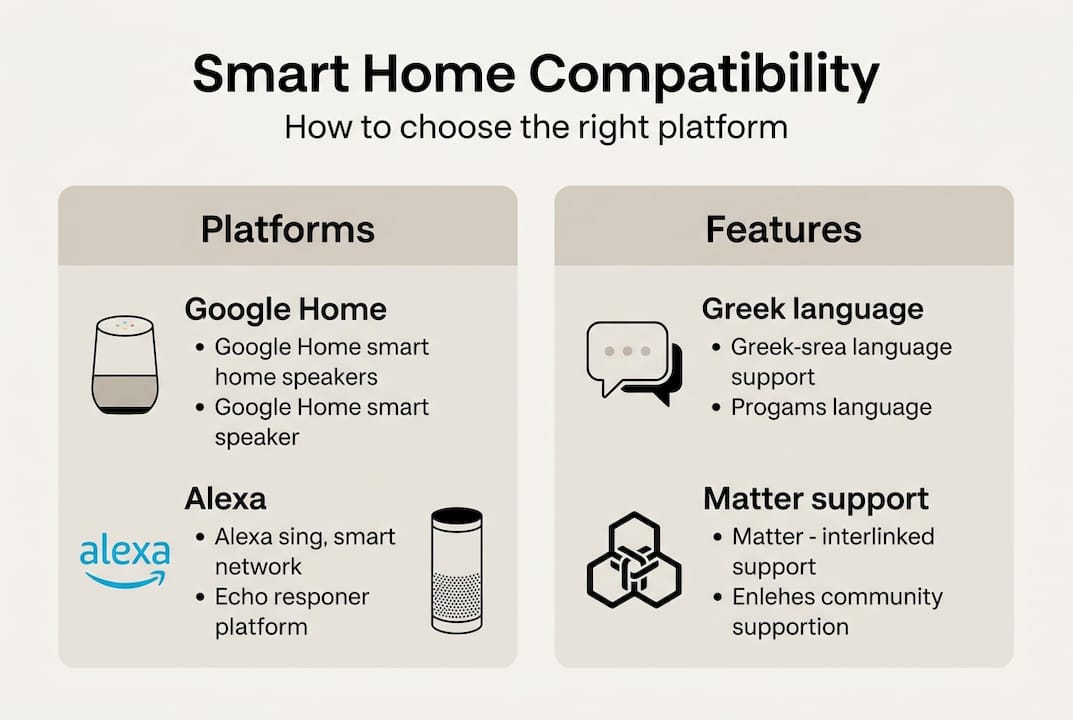
When you’re browsing best smart home devices, always check the box for Matter certification before purchasing. Devices that only support Zigbee or a proprietary Wi-Fi protocol may become obsolete or require extra hubs.
Here’s a quick checklist before you commit to any platform:
- Does it support your smartphone (Android or iPhone)?
- Are there Greek language voice options?
- Does it respect local data storage and privacy?
- Is it compatible with Matter-certified devices?
For a deeper look at smart gadget selection strategies, we’ve put together a full resource to help you match devices to your lifestyle.
As CNET’s smart home guide recommends, choose your platform first based on your smartphone and privacy needs, then select compatible devices.
Pro Tip: Decide on your platform before you buy anything. Even one incompatible device can create weeks of troubleshooting.
Check your Wi-Fi and home network setup
Your smart home is only as reliable as your Wi-Fi. This is the step most people skip, and it’s the number one reason devices go offline or automations break at the worst moment.
Greek apartments and houses often have thick concrete walls that kill Wi-Fi signals. A single router in the living room rarely covers a full home. Mesh networks like Eero or Orbi solve this by placing multiple nodes throughout your home, giving you 40-60% more coverage than a standard router setup.
Here’s how to audit your home network before adding smart gadgets:
- Run a speed test in every room using a free app like Speedtest by Ookla.
- Identify dead zones where signal drops below 10 Mbps.
- Check if your router supports a separate 2.4 GHz band for smart devices.
- Count how many devices are already connected and compare to your router’s limit.
- Upgrade to a mesh system if you have more than two dead zones or more than 20 connected devices.
The 2.4 GHz band is slower than 5 GHz but travels farther through walls, making it ideal for smart plugs, sensors, and bulbs. Keep your phones and laptops on 5 GHz and your IoT gadgets on 2.4 GHz for better stability.
| Device type | Minimum speed needed | Recommended band |
|---|---|---|
| Smart bulb/plug | 1 Mbps | 2.4 GHz |
| Smart camera | 2-4 Mbps | 2.4 GHz or 5 GHz |
| Smart thermostat | 1 Mbps | 2.4 GHz |
| Video doorbell | 4-8 Mbps | 5 GHz preferred |
For a full smart device comparison checklist including bandwidth requirements, that resource is worth bookmarking.
Learn more about the benefits of smart gadgets and why a solid network foundation makes all the difference.
Important: Poor Wi-Fi setup is the leading cause of smart home failures. Devices dropping offline can break scheduled automations, disable security cameras, and lock you out of smart locks. Fix your network first.
Pro Tip: Run a speed test in every room before buying more devices. If any room drops below 10 Mbps, add a mesh node there before anything else.
Prioritize high-impact gadgets for Greek homes
With your platform and network sorted, it’s time to spend wisely. Not all smart gadgets deliver equal value. The best starting points are the ones that save you money or add daily convenience right away.
For Greek homes, the three highest-impact starter gadgets are smart plugs, smart bulbs, and smart thermostats.
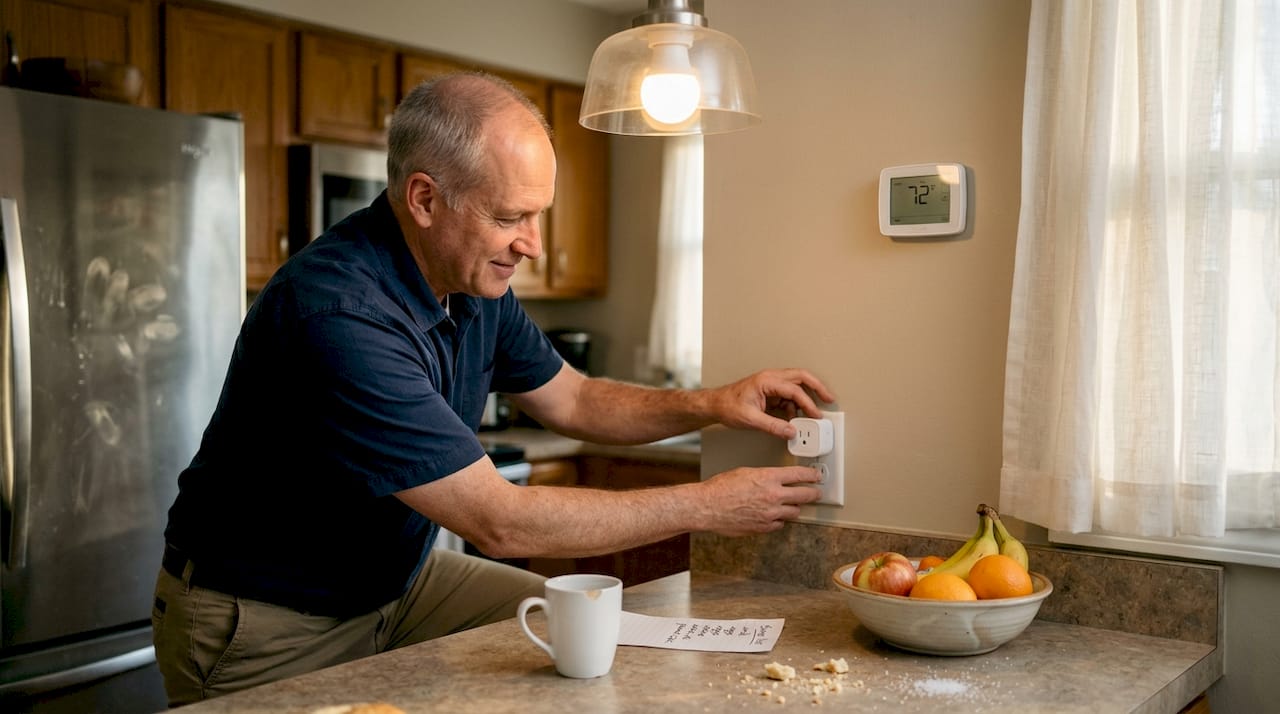
Smart thermostats are the biggest financial win. Greece’s hot summers and cold winters mean heating and cooling costs are significant. A device like the Tado smart thermostat can save you €250-400 per year by learning your schedule and adjusting temperatures automatically.
Lighting is the easiest entry point. Switching to smart bulbs like Philips Hue or IKEA TRÅDFRI can cut your lighting bill by 10-40% depending on usage. You also get the bonus of scheduling, dimming, and color control from your phone.
| Gadget | Price range | Annual savings | Ease of setup |
|---|---|---|---|
| Smart plug | €10-25 | €30-80 | Very easy |
| Smart bulb | €5-15 each | €20-60 | Very easy |
| Smart thermostat | €80-180 | €250-400 | Moderate |
| Smart camera | €40-120 | Security value | Easy |
Here’s what we recommend trying first for the biggest return:
- Smart plugs for appliances you forget to turn off (TV, coffee maker, phone chargers)
- Smart bulbs in the rooms you use most (living room, bedroom, kitchen)
- Smart thermostat if you have central heating or a heat pump
- Smart camera for front door or entrance security
For a detailed look at energy savings in Greek homes, we’ve broken down the numbers by household type and usage pattern.
Shelly is a particularly popular brand in Greece for smart plugs and switches because it supports local control without a cloud subscription, which means it works even when your internet is down.
Keep your smart home secure and reliable
Smart gadgets connected to your home network are also potential entry points for hackers. This is not a scare tactic. It’s a practical reality you need to address from day one.
Security alert: Smart home breaches rose 42% in Q1 2026, according to FTC data. Most incidents involved default passwords and outdated firmware. Take action before it happens to you.
Here are the steps to keep your smart home locked down:
- Change default passwords on every device immediately after setup.
- Enable multi-factor authentication (MFA) on all platform accounts (Google, Amazon, Apple).
- Keep firmware updated. Set devices to auto-update where possible.
- Move all smart gadgets to a guest network or a dedicated VLAN (a separate virtual network) to isolate them from your main devices.
- Prefer devices that offer local storage options over cloud-only storage for cameras and sensors.
For battery-powered sensors like door contacts or motion detectors, local execution (processing commands on a hub, not the cloud) is critical. If your internet goes down, a locally executed automation still works. A cloud-dependent one does not.
For practical tips on managing your home’s energy and security together, the energy management guide is a solid reference.
Discover more about gadgets for everyday benefit and how combining security with automation creates a genuinely smarter home.
Pro Tip: Test your key automations with your router temporarily offline. If they fail, switch those devices to a local hub like Shelly or Home Assistant for offline reliability.
Where to buy and what to expect in Greece
Knowing what to buy is only half the job. Knowing where to buy it in Greece, with proper warranty and support, saves you real headaches down the line.
The most trusted Greek retailers for smart home gadgets are Skroutz.gr, Public.gr, Plaisio.gr, and Kotsovolos.gr. Popular brands available locally include Philips Hue, IKEA TRÅDFRI, Shelly, Tado, and Google Nest.
Typical price ranges you can expect:
- Smart bulb: €5-15 per bulb
- Smart plug: €10-25
- Smart thermostat: €80-180
- Full starter setup (bulbs, plugs, thermostat): €300-500
Before you buy, check these key points:
- Warranty: Does the retailer offer a Greek warranty? EU law requires a minimum 2-year warranty on electronics.
- Language support: Does the app and device support Greek or at least English?
- Matter certification: Check the product page for the Matter logo to ensure cross-platform compatibility.
- Return policy: Can you return the device if it’s incompatible with your setup?
- Setup guides: Some stores like Public.gr and Plaisio.gr offer English setup guides for expats and tech-savvy buyers.
For devices like the Shelly Zigbee/Matter controller, Greek specialty electronics stores often carry the latest models with local support.
Also check our guide on free shipping for gadgets to understand how to get the best delivery deals when ordering online.
Pro Tip: Compare local warranty and support before choosing between retailers. A €5 saving is not worth it if you lose access to Greek-language customer service.
What most smart home buyers in Greece get wrong—and how to get it right
Here’s the honest truth we’ve seen play out repeatedly. Most people in Greece jump straight to buying gadgets without checking platform compatibility or their home network first. They end up with three apps, two hubs, and devices that only half-work together. It’s a frustrating and expensive lesson.
The buyers who get it right spend time upfront. They pick one platform, check their Wi-Fi, and start with two or three high-impact devices before expanding. They also treat security as a priority from day one, not something to fix later.
Energy savings are another overlooked win. Smart gadgets in Greek homes can realistically cut annual energy bills by 20-30% when thermostats and smart plugs are used consistently. That’s real money back in your pocket every year.
The smarter approach is simple: research first, buy second, expand gradually. Your home automation should feel effortless, not like a part-time job.
Ready to simplify your smart home journey?
You now have a clear, step-by-step framework for building a smart home that actually works. The next step is finding the right products, and that’s exactly where we come in.
At AskNik.gr, we’ve curated a selection of smart home and kitchen gadgets tested for real Greek households. From energy-saving plugs to smart kitchen tools, our catalog covers everything you need to get started. Browse our kitchen smart essentials collection for inspiration, and enjoy free shipping on your order. Our team is here to help you pick the right products for your home, your budget, and your platform. No guesswork, just smart choices.
Frequently asked questions
Which smart home platform is best for Greek homeowners?
Google Home is the top choice for Android users and supports Greek voice commands, while Alexa offers the broadest device compatibility and HomeKit prioritizes privacy. Choose your platform based on your smartphone and what matters most to you.
What are the most affordable smart gadgets to start with?
Smart plugs (€10-25) and smart bulbs (€5-15) are the easiest and most affordable entry points, offering immediate energy tracking and convenience from day one.
How do I make sure my smart home stays secure?
Keep all firmware updated, enable multi-factor authentication on your platform accounts, and place your smart gadgets on a separate guest network away from your main devices.
Where can I buy trusted smart gadgets in Greece?
The most reliable options are Skroutz.gr, Public.gr, Plaisio.gr, and Kotsovolos.gr, all of which carry popular brands with Greek customer support and EU warranty coverage.