
Most people think smart cameras just record video. They’re wrong. These devices actively analyze footage in real time, using artificial intelligence to detect people, vehicles, packages, and unusual behavior. For homeowners in Greece seeking enhanced security and convenience, understanding what makes a camera truly smart transforms how you protect your property. This article breaks down what smart cameras are, how they work, their advantages over traditional systems, and practical buying tips for Mediterranean homes.
Table of Contents
- Key takeaways
- What is a smart camera and how does it work?
- Edge AI versus cloud processing: balancing privacy and functionality
- Choosing the right smart camera for your Greek home: features and practical tips
- Addressing privacy, false alarms, and common challenges with smart cameras
- Explore smart home solutions at Asknik
- Frequently asked questions
Key Takeaways
| Point | Details |
|---|---|
| Active AI analysis | Smart cameras actively interpret video in real time to detect people, vehicles, packages, pets, and anomalies rather than passively recording. |
| Edge AI privacy and speed | Edge processing keeps footage on device and delivers responses in under 100 milliseconds. |
| Hybrid cloud edge benefits | Hybrid setups blend local detection with cloud analytics to balance fast local responses with access to advanced features. |
| Weatherproofed placement | IP65 or higher weatherproofing and careful placement are essential for Mediterranean climates. |
What is a smart camera and how does it work?
A smart camera is an intelligent video surveillance device equipped with AI capabilities for real-time analysis, distinguishing it from traditional cameras by actively interpreting footage to detect people, vehicles, packages, pets, and anomalies rather than passively recording. Think of it as the difference between a security guard who watches monitors all day versus one who knows exactly what to look for and alerts you only when something matters.
These cameras pack several core features into compact housings. You get HD or 4K video quality for crystal-clear footage. Motion detection triggers recording when activity occurs. Two-way audio lets you communicate through the camera. Night vision illuminates dark areas using infrared. Alert systems notify your phone instantly when the camera spots something unusual. All these features work together to create a comprehensive security solution.
The real magic happens in how smart cameras process information. Computer vision and machine learning models analyze each video frame, drawing bounding boxes around detected objects and classifying what they see. This processing happens either on the camera itself, called edge AI, or in remote data centers through cloud processing. Edge AI keeps everything local, protecting your privacy and delivering responses in under 100 milliseconds. Cloud processing offers more advanced analytics but requires internet connectivity and introduces latency.
Smart cameras deliver several practical capabilities:
- Object detection identifies specific items like people, cars, or packages
- Facial recognition distinguishes family members from strangers
- Behavioral analysis spots unusual movement patterns or loitering
- Custom zone monitoring focuses on specific areas like driveways or gates
- Activity timelines show when and where events occurred throughout the day
“The shift from passive recording to intelligent surveillance represents the biggest advancement in home security technology in decades. Smart cameras don’t just capture what happens; they understand it and respond accordingly.”
For Greek homeowners exploring practical smart home tips, understanding these fundamentals helps you choose cameras that match your actual needs rather than falling for marketing hype.
Edge AI versus cloud processing: balancing privacy and functionality
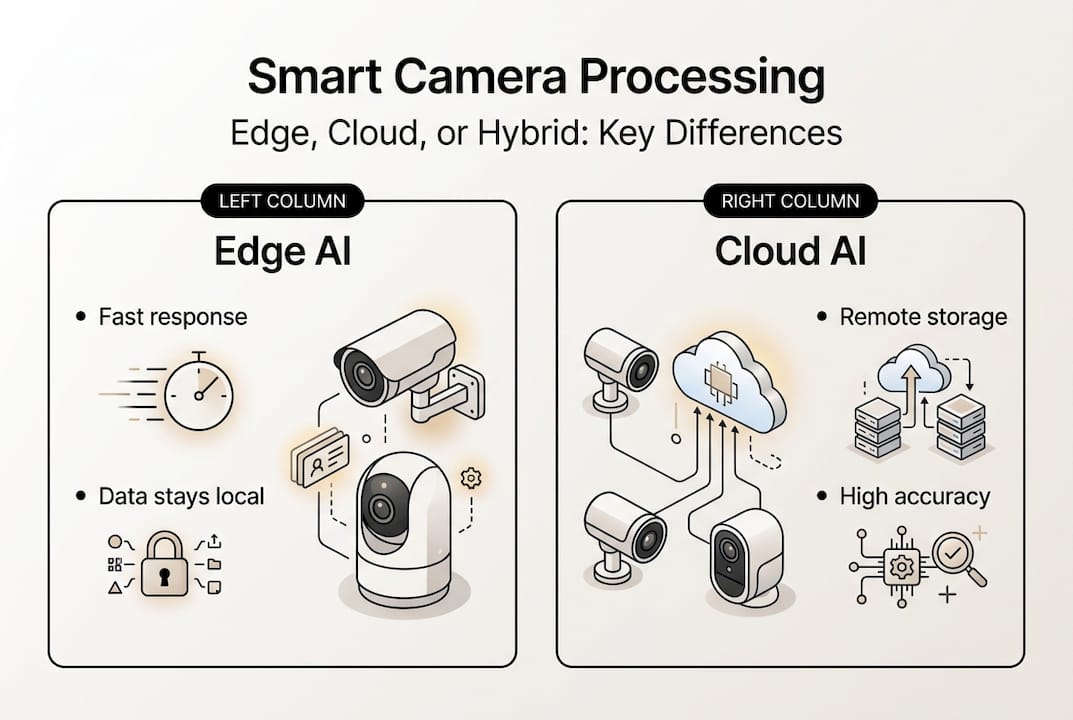
The processing architecture you choose dramatically impacts how your smart camera performs. Edge processing means the camera’s built-in chip analyzes video locally, never sending footage to external servers unless you explicitly choose to. Cloud processing uploads video to remote data centers where powerful computers handle the analysis and send results back to you.
Each approach carries distinct tradeoffs. Edge AI responds almost instantly because there’s no round trip to distant servers. Your footage stays private on your property, crucial under European data protection rules. The camera works even when your internet drops. However, edge chips have limited computing power, restricting advanced features. Cloud AI unlocks sophisticated analytics like advanced facial recognition and behavior prediction. It stores footage offsite for access anywhere. Updates add new capabilities without hardware changes. The downsides include dependency on stable internet, potential privacy concerns, and often mandatory monthly subscriptions.
Many manufacturers now offer hybrid solutions that combine the best of both worlds. The camera performs basic detection locally for instant alerts and privacy. When it spots something interesting, it optionally uploads clips to the cloud for deeper analysis or long-term storage. This balanced approach works particularly well for Greek homes where internet reliability varies by location.
| Criteria | Edge AI | Cloud AI | Hybrid |
|---|---|---|---|
| Latency | Under 100ms | 200-500ms | 100-300ms |
| Privacy | Excellent | Moderate | Good |
| Reliability | Works offline | Requires internet | Partial offline |
| Features | Basic to moderate | Advanced | Moderate to advanced |
| Subscription | Often none | Usually required | Optional |
Pro Tip: Greek homeowners should prioritize edge or hybrid setups. GDPR regulations favor local processing, and many island locations experience intermittent connectivity. A camera that stops working when the internet drops provides no security at all.
For those building comprehensive smart home benefits for modern homes, understanding processing architectures ensures your security system integrates smoothly with other devices while respecting privacy requirements.
Choosing the right smart camera for your Greek home: features and practical tips
Selecting the right smart camera requires matching features to your specific environment and needs. Resolution matters, but 1080p suffices for most applications. Splurging on 4K makes sense only if you need to zoom into distant details like license plates. Field of view determines coverage area. Wider angles, around 130-160 degrees, cover more space but may distort edges. Night vision quality varies dramatically between models. Look for cameras with infrared ranges of at least 30 feet for outdoor use. Pan-tilt-zoom capability lets one camera cover larger areas by moving to track subjects.
Weatherproofing rated IP65 or higher is essential for Mediterranean climates where cameras face intense summer sun, salt air near coasts, and occasional heavy rain. Lower ratings mean water and dust will eventually damage outdoor cameras. For island properties or remote locations, solar-powered options eliminate wiring hassles and ensure continuous operation even during power outages.
Installing cameras effectively requires strategic placement:
- Cover all entry points including front door, back door, and garage
- Mount cameras 8-10 feet high to prevent tampering while maintaining clear views
- Angle cameras slightly downward to capture faces rather than the tops of heads
- Avoid pointing cameras directly at bright lights or reflective surfaces
- Test coverage areas before permanently mounting to ensure no blind spots
- Set up custom detection zones to focus on driveways and walkways, not trees or streets
False alarms plague traditional motion sensors, but AI dramatically reduces nuisance alerts:
- Trees swaying in wind trigger basic motion detection constantly
- Insects flying near the camera at night activate infrared sensors
- Shadows from passing clouds fool simple algorithms
- Pets moving around yards generate endless notifications
- Smart cameras filter these by recognizing actual threats versus environmental changes
Recommended setups include 3-5 cameras per home covering front, back, and garage areas with custom zones configured to reduce false alarms. This balanced approach provides comprehensive coverage without overwhelming you with alerts.
| Model Type | Resolution | Weather Rating | AI Features | Power Options |
|---|---|---|---|---|
| Budget Indoor | 1080p | N/A | Basic motion | Plug-in |
| Standard Outdoor | 1080p | IP65 | Person detection | Plug-in |
| Premium Outdoor | 2K-4K | IP67 | Full AI suite | Plug-in or solar |
| PTZ Professional | 2K-4K | IP66 | Advanced tracking | Plug-in |
Pro Tip: Before buying, test how cameras perform in offline mode. Some models become useless without internet connectivity. For remote Greek locations, prioritize cameras with robust local storage and edge processing. Solar-powered options work brilliantly on islands where running electrical lines proves expensive or impossible.
Explore options like the Bear 1080P WiFi IP security camera which combines auto-tracking, night vision, and reliable performance. Pair your security setup with other smart home practical tips to create an integrated system that enhances both security and daily convenience.
Addressing privacy, false alarms, and common challenges with smart cameras
Traditional security systems generate false alarms in 94-98% of police calls, wasting emergency resources and eroding trust in security alerts. Trees blowing in wind, bugs crawling on lenses, and shadows from passing cars trigger constant notifications. Homeowners quickly learn to ignore alerts, defeating the entire purpose of having cameras.
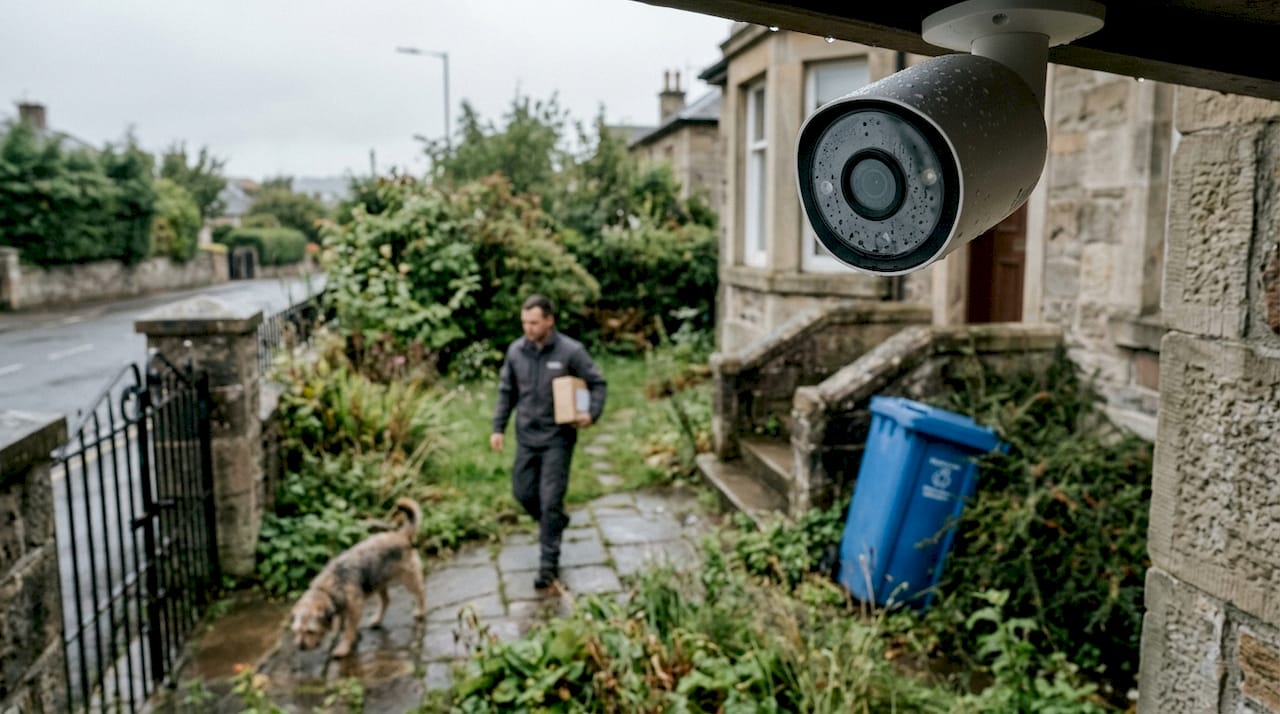
AI capabilities transform this frustrating reality. Smart cameras distinguish between humans, animals, vehicles, and environmental factors. They learn normal patterns for your property and alert only when something unusual occurs. A person walking up your driveway triggers an alert. A cat crossing the yard does not. This filtering reduces nuisance notifications by over 90% while ensuring you never miss genuine security events.
Privacy concerns require serious attention, especially under GDPR compliance requirements critical for EU and Greek installations. Cameras in apartment buildings or shared spaces must respect neighbors’ privacy. Pointing cameras at public sidewalks or neighboring properties may violate regulations. Cloud storage of facial recognition data creates additional compliance obligations.
Best practices for respecting privacy and meeting regulations include:
- Configure detection zones to exclude neighboring properties and public areas
- Disable facial recognition features unless specifically needed and legally compliant
- Choose cameras with encrypted local storage rather than mandatory cloud uploads
- Post visible notices that video surveillance is in operation
- Retain footage only as long as necessary, typically 7-30 days
- Provide neighbors with contact information if they have privacy concerns
- Review local regulations about audio recording, which often has stricter rules than video
Encrypted local storage protects your privacy while maintaining security. Footage stays on your property, accessible only with proper authentication. Avoid cameras requiring mandatory cloud subscriptions that upload everything automatically. When cloud storage adds value, choose services offering end-to-end encryption where even the provider cannot view your footage.
For smart home privacy safeguards, combining smart cameras with other security devices creates layered protection. Motion sensors, door contacts, and smart locks work together, with cameras providing visual verification only when other sensors trigger. This approach minimizes constant recording while maximizing security.
Network security matters as much as physical security. Change default passwords immediately. Enable two-factor authentication. Keep firmware updated. Isolate cameras on a separate network segment from computers and phones. These steps prevent hackers from accessing your cameras or using them as entry points to other devices.
Explore smart home solutions at Asknik
Ready to enhance your home security with smart camera technology? Asknik offers carefully selected smart home products tailored for Greek homeowners and tech enthusiasts. Our collection includes cameras with the AI capabilities, weatherproofing, and local processing options discussed throughout this article.

The Bear 1080P WiFi IP security camera delivers auto-tracking, infrared night vision, and reliable WiFi connectivity at an accessible price point. Perfect for both indoor monitoring and covered outdoor areas, it combines essential smart features with straightforward setup.
Beyond cameras, explore our practical smart home tips for integrating security with lighting, climate control, and entertainment systems. Creating a cohesive smart home ecosystem amplifies the value of each component. While you’re upgrading your home, check out innovative solutions in our kitchen and cooking essentials collection to bring smart technology into every room.
Frequently asked questions
What exactly is a smart camera?
A smart camera is a video device with built-in artificial intelligence that analyzes footage in real time to detect and identify specific objects, people, and behaviors. Unlike traditional cameras that simply record everything, smart cameras understand what they’re seeing and alert you only when something important happens.
What’s the difference between edge AI and cloud AI processing?
Edge AI processes video directly on the camera’s chip, keeping data local and responding in under 100 milliseconds. Cloud AI uploads footage to remote servers for more advanced analysis but requires internet connectivity and introduces latency. Hybrid systems combine both approaches for optimal performance and privacy.
How many smart cameras does a typical Greek home need?
Most homes benefit from 3-5 cameras covering front entrances, back doors, garages, and side access points. Exact numbers depend on property size, layout, and vulnerable areas. Strategic placement with proper field of view coverage matters more than total camera count.
How do smart cameras handle privacy and reduce false alarms?
Smart cameras use AI to distinguish between people, animals, vehicles, and environmental factors, reducing false alarms by over 90%. For privacy, choose models with encrypted local storage, configure detection zones to exclude neighboring properties, and comply with GDPR by retaining footage only as long as necessary.
Why is weatherproofing important for outdoor cameras in Greece?
Mediterranean climates expose cameras to intense sun, salt air near coasts, and occasional heavy rain. IP65 or higher weatherproof ratings ensure cameras withstand these conditions without water or dust damage. Lower ratings lead to premature failure, especially in coastal locations where salt accelerates corrosion.