
TL;DR:
- Performance depends more on navigation and obstacle avoidance than raw suction power.
- Common challenges include cords, pet waste, and thick carpets that robots struggle to clean effectively.
- Prioritize smart mapping, obstacle detection, and maintenance over high suction for better daily results.
Robot vacuums promise hands-free cleaning, but the reality is more nuanced than the ads suggest. Many models struggle with cords and pet waste despite bold marketing claims. The truth is that performance varies widely, and picking the wrong model for your space can leave you frustrated rather than impressed. This guide breaks down how robot vacuums actually work, what specs matter most, where they fall short, and how to choose the right one for your home. Whether you live in a compact Athens apartment or a larger house with pets, you’ll leave with a clear, practical picture.
Table of Contents
- How do robot vacuums work?
- Key features to compare
- Common challenges and real limitations
- How to choose the right robot vacuum for your home
- Why smarter navigation, not more suction, is the future
- Getting started with smart cleaning solutions
- Frequently asked questions
Key Takeaways
| Point | Details |
|---|---|
| Navigation trumps power | Good navigation and smart mapping impacts cleaning performance more than suction strength alone. |
| Set realistic expectations | Robot vacuums reduce work but don’t eliminate manual cleaning for deep messes or complex spaces. |
| Match the vacuum to your home | Choose features based on your household’s floor type, presence of pets, and apartment layout. |
| Affordable models perform well | Budget-friendly robot vacuums often deliver solid cleaning and value, with or without Wi-Fi. |
How do robot vacuums work?
At their core, robot vacuums are compact, disc-shaped devices that move autonomously around your floor. Understanding what’s inside helps you make a smarter buying decision.
Every robot vacuum shares a few essential components. Side brushes sweep debris from corners and edges toward the center. A main roller brush (or brushless suction port on some models) picks up dirt from the floor. A motor generates suction, pulling debris into a dustbin. Wheels and cliff sensors keep the unit moving and prevent it from tumbling down stairs.
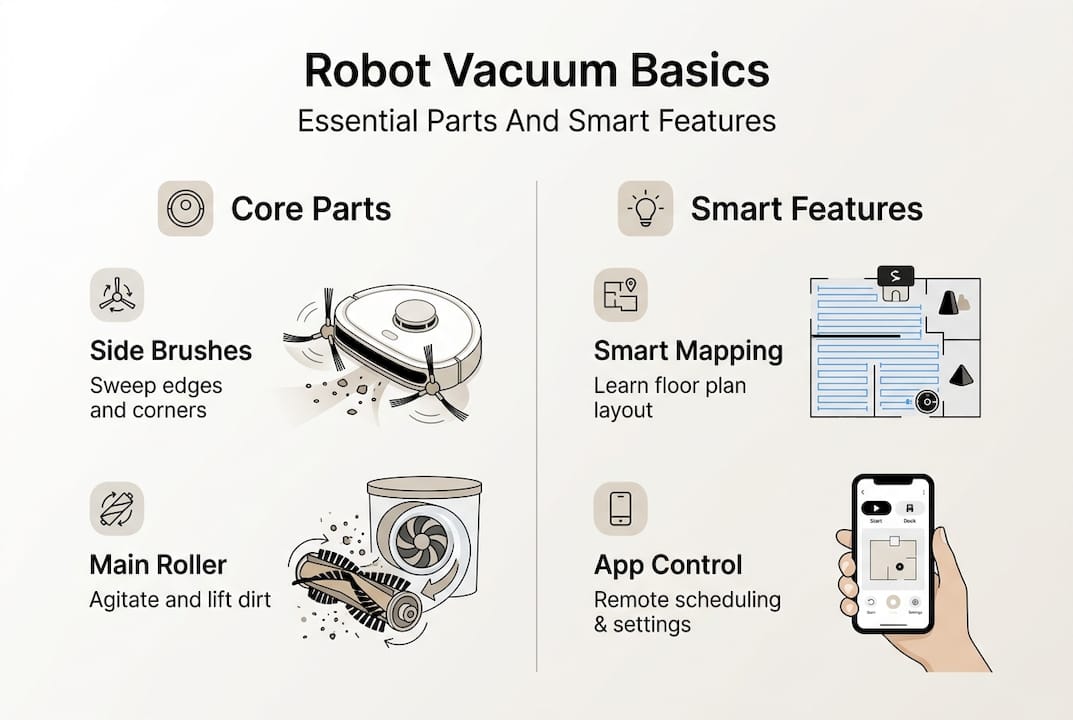
The real differentiator between budget and premium models is navigation. Older, cheaper robots use a random bounce pattern, spinning around and changing direction when they hit an obstacle. This works eventually, but it’s inefficient and leaves missed spots. Modern models use systematic mapping powered by LIDAR (laser-based distance sensing) or cameras to build a floor plan of your home. They clean in neat, overlapping rows, similar to how you’d mow a lawn.
Smart features have transformed robot vacuums from simple gadgets into genuine home automation tools. You can schedule cleanings, set no-go zones, and monitor progress from your phone. Many models now connect with Amazon Alexa, Google Home, and Apple HomeKit. If you’re curious about automated cleaning basics, understanding these integrations is a great starting point.
Pro Tip: A strong navigation system matters far more than raw suction power. A robot that maps your home efficiently will clean more of it, more consistently, every single run.
Here are the smart home integrations now common in robot vacuums:
- Voice assistant control (Alexa, Google Assistant, Siri)
- Smartphone app scheduling and real-time mapping
- Auto-empty base stations that hold weeks of debris
- Multi-floor map storage for homes with stairs
- Zone cleaning to target specific rooms on demand
- Mopping modules that combine vacuuming and wet mopping in one pass
According to navigation spec improvements, AI and vision-based features are rapidly advancing, making smarter navigation the defining upgrade of recent generations.
Key features to compare
Now that you know how robot vacuums function, the next step is comparing features that affect performance and suitability for your specific home.
Not all specs are created equal. Here’s a side-by-side look at the features that matter most:
| Feature | Budget models | Mid-range models | Premium models |
|---|---|---|---|
| Suction power | 1,500–2,000 Pa | 2,500–4,000 Pa | 5,000+ Pa |
| Navigation type | Random bounce | Basic mapping | LIDAR/AI mapping |
| Object avoidance | Minimal | Moderate | Advanced (AI vision) |
| Runtime | 60–80 min | 90–120 min | 120–180 min |
| Dustbin size | 300–400 ml | 400–600 ml | 600 ml+ or auto-empty |
| Noise level | 65–70 dB | 60–65 dB | 55–62 dB |
| Price range | €100–€250 | €250–€500 | €500–€1,500+ |
One important trade-off to understand: top models trade cleaning power for object avoidance, and the best balance depends entirely on your home’s layout and your priorities. A model with extreme suction but poor sensors will get stuck constantly in a cluttered Greek apartment.
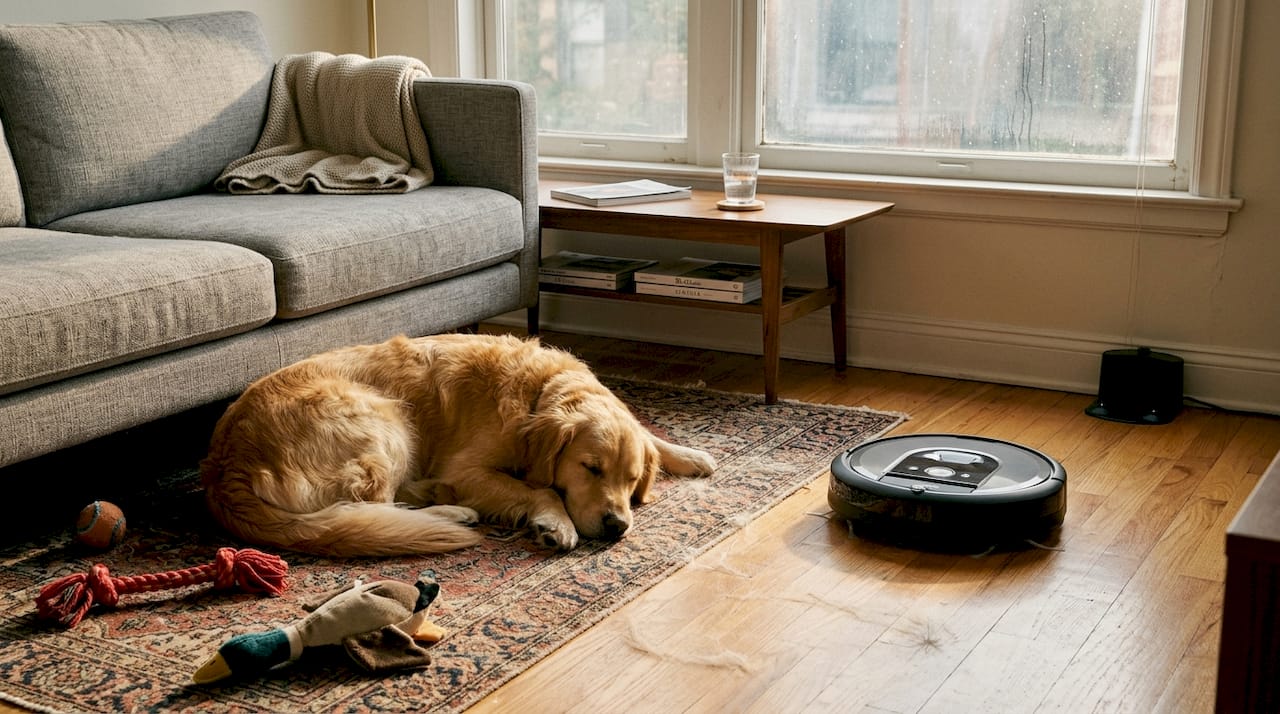
For homes with pets, strong suction and tangle-resistant brushes are non-negotiable. For homes with mostly hard floors (common in Greek apartments), even a mid-range model performs very well. Thick rugs and carpeted bedrooms demand higher suction and good carpet detection. If you’re comparing cleaning tools for different surfaces, car vacuum alternatives can also give you useful context on suction specs.
Pro Tip: Balance cleaning power and navigation. A model with great suction but poor mapping will miss corners and get stuck. A well-navigating model with moderate suction will outperform it over time.
Must-have features:
- Systematic mapping (not random navigation)
- Cliff sensors and anti-drop protection
- Adequate runtime for your floor area
- Easy-to-clean dustbin and accessible brush roll
Nice-to-have extras:
- Auto-empty base station
- Integrated mopping
- AI-powered obstacle recognition
- Multi-floor map storage
Common challenges and real limitations
Having compared features, it’s important to talk openly about where robot vacuums fall short and what you’ll still have to do by hand.
No robot vacuum is perfect. Even the best models on the market face consistent challenges that lab tests confirm. Cords, pet waste, and thick carpets trip up nearly every model tested, and all require regular maintenance to keep running well.
Lab testing insight: In controlled tests, even top-tier robot vacuums scored below 80% on object avoidance for small items like socks, cables, and pet waste. No model currently achieves full autonomy.
Here’s what robot vacuums commonly struggle with:
- Loose cables and charging cords get tangled in brushes quickly
- Pet accidents are rarely detected and spread instead of cleaned
- High door thresholds (common in older Greek homes) block movement
- Thick rugs and shag carpets can stall or trap the unit
- Small objects like toys, earbuds, and socks cause jams
- Cluttered rooms with lots of chair legs and furniture reduce coverage
Robot vacuums also need ongoing maintenance. Skipping this leads to reduced suction, brush damage, and shorter device life. If you have pets at home, the pet automation challenges involved in full home automation go beyond just vacuuming.
Ongoing maintenance tasks you’ll need to do regularly:
- Empty the dustbin after every 1–2 runs
- Clean the brush roll to remove hair tangles (weekly)
- Rinse or replace filters every 2–4 weeks
- Wipe sensors and charging contacts monthly
- Check wheels for debris buildup
For deep cleaning, heavy messes, or upholstery, a traditional vacuum is still the better tool. Think of a robot vacuum as a daily maintenance device, not a full replacement for your regular cleaning routine.
How to choose the right robot vacuum for your home
With a clear understanding of potential challenges, let’s walk through how to pick the model that fits your daily life and space.
Different homes have different needs. Here’s a quick reference table for common Greek home types:
| Home type | Key priority | Recommended features |
|---|---|---|
| Small apartment (under 60 m²) | Compact size, quiet operation | Basic mapping, low profile |
| Home with pets | Hair pickup, sealed dustbin | Strong suction, tangle-free brush |
| Multi-floor home | Floor plan flexibility | Multi-map storage, long battery |
| Mixed hard floors and rugs | Surface adaptability | Carpet detection, adjustable suction |
| Busy household, limited time | Minimal intervention | Auto-empty base, app scheduling |
Follow these steps to choose the right model:
- Measure your space. Calculate the total floor area you want covered. This determines the runtime you need.
- Identify your floor types. Mostly hard floors? A mid-range model is enough. Thick carpets? Prioritize suction and carpet detection.
- Check your home’s layout. Lots of furniture, cables, or pets? Invest in better obstacle avoidance.
- Set your budget. Budget models offer solid value and often work offline without a cloud subscription.
- Decide on smart features. Do you want app control, voice commands, or auto-emptying? These add cost but also convenience.
- Read real user reviews for your specific floor type and home size, not just lab benchmarks.
For a broader view of what automated tools can do in your home, the automated cleaning guide covers the full picture. And if you want a hands-on cleaning tool to complement your robot vacuum, the electric spin cleaner is a solid option for surfaces robots can’t reach.
A robot vacuum makes the most sense when you want consistent daily maintenance with minimal effort. It makes less sense as your only cleaning tool if you have heavy pet shedding, thick carpets throughout, or a very cluttered home.
Why smarter navigation, not more suction, is the future
Now that you have a plan for choosing the right model, here’s why the smartest buy isn’t always the most powerful on paper.
We see it constantly: marketing puts suction power front and center, measured in Pascals, as if a higher number automatically means a cleaner home. But in real-world use, especially in Greek homes with their mix of tile, marble, and area rugs, raw suction is rarely the bottleneck. Navigation is.
A robot that maps your home accurately, avoids obstacles reliably, and returns to its dock without getting stuck will clean more of your floor every single day. A high-suction model that jams on a cable or misses half the room is a frustrating experience, regardless of its specs sheet.
AI navigation advancements are currently outpacing improvements in raw suction, and even the best models aren’t perfect yet. But the trajectory is clear: multi-sensor fusion, better AI vision, and smarter path planning are where the real gains are happening.
For Greek consumers, this means prioritizing the support ecosystem too. A brand with local support, available spare parts, and a reliable app matters more than an extra 1,000 Pa of suction you’ll rarely notice. Explore automated cleaning insights to stay ahead of what’s coming in smart home technology.
Pro Tip: When comparing models, look at navigation test scores and obstacle avoidance ratings before you look at suction power. That’s where your daily experience is actually decided.
Getting started with smart cleaning solutions
With a clear understanding of robot vacuums and what to look for, here’s where you can find budget-friendly, practical solutions tailored for your home.
At AskNik.gr, we bring together smart home tools, gadgets, and cleaning solutions designed to make everyday life easier. Whether you’re looking for your first robot vacuum or want to build out a smarter cleaning routine, we’ve got options that fit real Greek homes and real budgets.

From compact cleaning gadgets to kitchen and cleaning essentials, our catalog is built around quality products with free shipping and exclusive offers. Our team is always available to help you find the right fit. Browse our smart home collection today and take the first step toward a cleaner, more automated home.
Frequently asked questions
Are robot vacuums worth it for small Greek apartments?
Yes, especially if you pick a model suited to small spaces and mixed surfaces like tile and marble. Navigation and low-profile design matter more than suction in compact layouts.
Will a robot vacuum fully replace traditional vacuuming?
No. Robot vacuums reduce daily maintenance effort, but thick carpets and heavy messes still need a traditional vacuum for thorough results.
How often do I need to maintain a robot vacuum?
Weekly maintenance is the standard: clean the brush roll, empty the dustbin, and check for tangles. Hair tangles and filter clogs are the most common causes of reduced performance.
Do budget robot vacuums provide good value?
Absolutely. Budget models excel in value and many work offline without requiring a cloud account, making them a practical choice for most households.