


10 Items Every Home Safety Kit Needs

Quick Summary
A home safety kit should include water, non-perishable food, first-aid supplies, and prescription medicines for at least a few days, plus lighting, a battery or hand-crank radio, clothing, blankets, hygiene supplies, and copies of important documents. For a stronger plan, many households aim for two weeks of supplies and add local hazard gear such as anchored furniture and working smoke and carbon monoxide alarms.
- Keep at least one gallon of water per person per day, plus extra for pets.
- Store prescription medicines with a supply covering a few days beyond your normal refill schedule.
- Many households aim for two weeks of supplies stored in a dry, cool place.
- Test smoke and carbon monoxide alarms monthly and replace backup batteries at least once a year.
- Rotate water and check food dates every three months, and do a full reset every six months.
Table of Contents
- Start With Water, Food, and a Realistic Supply Duration
- First-Aid Supplies and Prescription Medicines
- Lighting, Power, and Emergency Communication
- Clothing, Blankets, Hygiene, and Sanitation Supplies
- Adapting Your Home Safety Kit for Seniors Living Alone
- Tailoring the Kit to Local Hazards Like Earthquakes
- Your Emergency Kit Checklist and Maintenance Routine
- Frequently Asked Questions
Start With Water, Food, and a Realistic Supply Duration
Last Updated: November 7, 2026
Building a home safety kit starts with the basics, and water sits at the top of the list. This guide is designed to help you decide what belongs in your kit, how much of each item to keep, and how to keep everything ready for the moment you need it. The plan below covers ten items, from water and food to communication and personal protection.
Most people underestimate how much water they need. Emergency planning guidance from Ready.gov emergency supply recommendations advises keeping at least one gallon of water per person per day. Many households also set aside a few extra days of supply. Plan for everyone in the home, including pets.
Non-perishable food should cover the same period. Choose items that need little or no cooking and do not require refrigeration, such as canned goods, dried fruit, nut butter, and crackers. Rotate them every few months so nothing expires unnoticed.
Realistic duration matters. A kit that lasts three days is a useful starting point, but it may not be enough after a major storm or power outage. Many households aim for two weeks of supplies stored in a dry, cool place.
First-Aid Supplies and Prescription Medicines
A well-stocked first-aid kit handles most minor injuries while help is delayed. Include bandages, gauze pads, adhesive tape, antiseptic wipes, antibiotic ointment, burn cream, tweezers, and scissors. Add pain relievers and an antihistamine that your household uses regularly.
Prescription medicines deserve their own plan. Keep a supply that covers at least a few days beyond your normal refill schedule, and store it in a waterproof container. Keep a written list of medications, dosages, and allergies alongside the kit.
Many households find that a medicine organizer with a reminder function helps them keep track of doses during a disruption. You can explore a medicine portioning box with an alarm that organizes doses and sends reminders. The Asknik [product]Smart Pill Box with Alarm and Bluetooth[/product] sends reminders at up to seven times a day and organizes a full week of doses.

Lighting, Power, and Emergency Communication
Power outages often last longer than expected, so reliable lighting matters. Keep battery-powered flashlights, a lantern, and spare batteries in the kit. Store batteries separately from devices to prevent accidental activation.
Motion-sensing night lights are useful in hallways and bathrooms. The Asknik [product]motion-sensor night light[/product] switches on when it detects movement and turns off on its own after a short delay.
Communication is equally important. Keep a battery-powered or hand-crank radio tuned to official weather and emergency broadcasts. Write down the phone numbers your family would need, and agree on a meeting point and an out-of-area contact. A charged power bank for your phone completes this section.
For households with children or older relatives, a home camera can help you check on the house while you are away. The Asknik [product]Wi-Fi 1080P bear-shaped camera[/product] is a Wi-Fi home camera with 1080P resolution and night-vision capability as described in its listing.
Clothing, Blankets, Hygiene, and Sanitation Supplies
Pack at least one change of clothing per person, along with sturdy shoes and work gloves. Warm blankets or sleeping bags matter in cold weather, and a lightweight emergency blanket takes little space.
Hygiene supplies are often forgotten. Include soap, hand sanitizer, toothbrushes, toothpaste, feminine hygiene products, and wet wipes. Add trash bags and a small bucket with a lid for basic sanitation if water or plumbing is unavailable.
Keep important documents in a waterproof bag: identification, insurance policies, bank details, and vaccination records. Store copies on a secure drive as well.
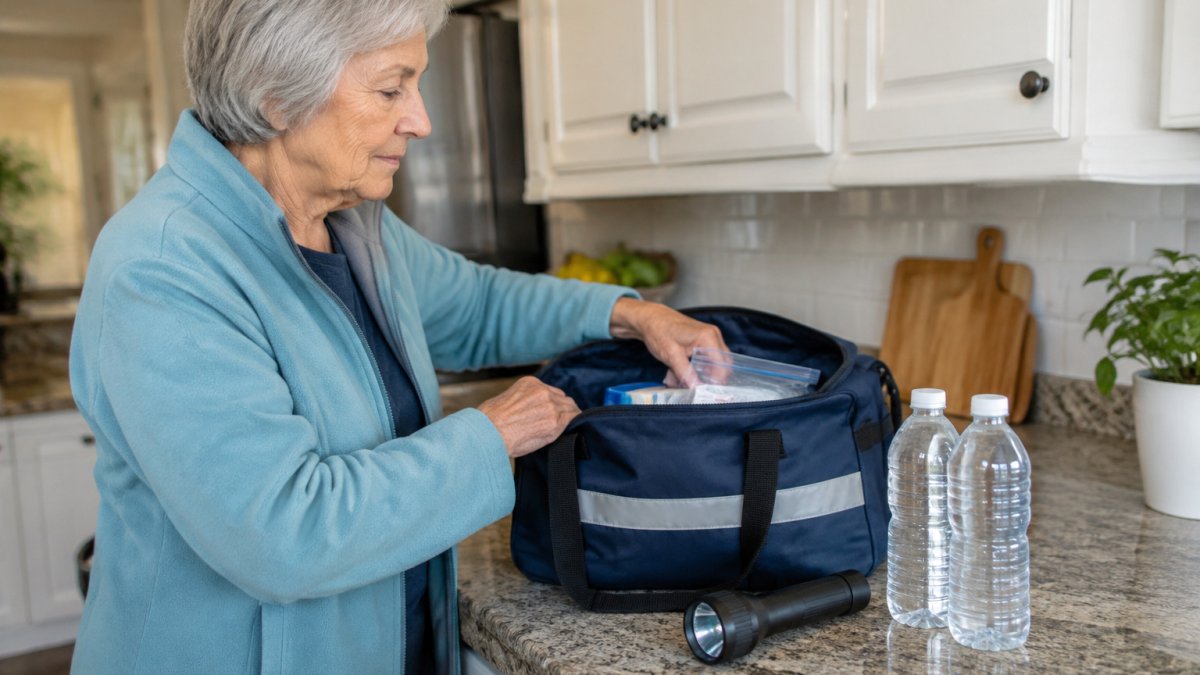
Adapting Your Home Safety Kit for Seniors Living Alone
Someone living alone has different needs. A fall or sudden illness can leave them unable to reach help, so the kit should make calling for assistance as simple as possible.
A personal alarm worn on a keychain or belt can draw attention quickly. The Asknik [product]130dB personal alarm keychain with LED flashlight[/product] is a small keychain alarm with a built-in LED light. Check that the alarm is charged and that the person knows how to activate it.
Smart home safety devices, such as fall detection and monitoring systems, are an option some households consider. Review which features fit the person's daily routine.
Keep a printed list of emergency contacts and medical details near the front door, where it is easy to find.
Tailoring the Kit to Local Hazards Like Earthquakes
A general kit is a good start, but local risks should shape what you add. A common gap in home safety planning is covering disaster supplies while skipping the household safety equipment that prevents injuries in the first place. Before you tailor for weather, make sure the fixed safety gear is in place.
Home-specific hazard equipment to add or verify:
- Smoke alarms on every level of the home and inside or just outside each sleeping area. Test them monthly and replace the backup batteries at least once a year, or sooner if the alarm chirps.
- Carbon monoxide alarms near sleeping areas and on each level. Carbon monoxide is odorless, so an alarm is the only reliable warning, especially if you have a gas furnace, water heater, fireplace, or attached garage.
- A fire extinguisher rated for common household fires (look for an ABC rating) in the kitchen and near the main exit. Check the pressure gauge monthly and follow the manufacturer's replacement interval.
- Gas and water shutoff tools. Know where the main gas valve and water main are, and keep the correct wrench or tool tethered nearby. After an earthquake or flood, shutting off gas quickly can prevent fire and explosion.
- Furniture and TV anchoring. Secure bookcases, dressers, and televisions to wall studs with straps or brackets. This is the single most effective step for earthquake and child-safety readiness.
- A whistle and sturdy shoes beside each bed so you can signal for help and avoid broken glass if you are trapped or moving in the dark.
Then adapt for your regional hazard:
- Earthquake-prone areas: anchor heavy furniture, keep shoes and a whistle by the bed, and store a pry bar or multi-tool to move debris.
- Flood-prone homes: use waterproof storage bins, keep valuables and documents above expected flood level, and store a small pump or sandbags if your area floods regularly.
- Wildfire zones: keep N95 masks, goggles, and a battery radio for evacuation alerts, and store documents in a fire-resistant safe or take them with you.
- Extreme heat: add extra water, battery fans, and cooling towels; plan a cool location to go if power fails.
- Winter storms: add blankets, fuel-free heating options, and a car emergency kit if you may need to leave.
Review your local emergency management office's guidance, which often lists hazards specific to your region. Watch out: a kit that lists supplies but never checks the smoke and carbon monoxide alarms leaves important home safety gaps uncovered.
Your Emergency Kit Checklist and Maintenance Routine
Use this checklist as a starting point, then scale quantities to your household.
- Water: at least one gallon per person per day, plus extra for pets
- Non-perishable food for the planned duration, with a manual can opener
- First-aid kit and at least a few days of prescription medicines
- Flashlights, a lantern, and spare batteries stored separately
- Battery or hand-crank radio and a charged power bank
- Change of clothing, sturdy shoes, and work gloves per person
- Warm blankets or sleeping bags and an emergency blanket
- Hygiene and sanitation supplies, including trash bags and a lidded bucket
- Copies of important documents in a waterproof bag
- Cash in small bills and a written contact list
- Smoke and carbon monoxide alarms tested, fire extinguisher checked
- Gas and water shutoff tools accessible
- Supplies for babies, older adults, people with disabilities, and pets
Scale quantities to your household. Count every person and pet, then add a buffer. A household of four needs roughly four gallons of water per day, so a two-week supply is about 56 gallons. Store water in food-grade containers, rotate it periodically, and consider a backup treatment option such as purification tablets or a filter. For infants, add formula, bottles, and diapers; for older adults, add spare glasses, hearing-aid batteries, and mobility aids; for pets, add food, water, and a leash or carrier.
Set a maintenance schedule. A common pattern is a light check every three months and a full reset every six months:
- Monthly: test smoke and carbon monoxide alarms and check the fire extinguisher gauge.
- Every three months: rotate water, check food dates, and test flashlights and the radio.
- Every six months: replace expired food and water, update prescription medicines, refresh documents and contact lists, and re-check quantities as your household changes.
- Annually: replace alarm backup batteries and review your local hazard plan.
Watch out: stored water and food lose quality over time, and medicines expire silently. Check dates on each visit rather than relying on memory, and write the next check date on the kit lid so it does not get skipped.
Frequently Asked Questions
What should I put in my home emergency kit?
A home safety kit should cover at least three days of drinking water (one gallon per person per day), non-perishable food that needs no cooking, a first-aid kit, prescription medicines, a flashlight with spare batteries, a battery or hand-crank emergency radio, warm clothing and a blanket, sanitation supplies, copies of important documents, and cash in small bills. Add items for infants, pets, or people with medical devices in your household. Review the list every six months so it still fits who lives in the home.
How much food and water should I keep in a home safety kit?
Plan for one gallon of water per person per day, with a minimum of three days, though a 14-day supply is a stronger target if space allows. Choose food that is easy to prepare without power, such as canned fish, peanut butter, crackers, and dried fruit. Rotate stock regularly, check expiration dates, and store water in sealed, food-safe containers kept in a cool, dark place. Include a manual can opener.
What should a senior living alone include in a home safety kit?
A senior living alone should keep a seven-day supply of prescription medicines with a current list of dosages, copies of medical insurance cards, and any hearing aid or glasses batteries or spares. Include a personal alarm or a way to call for help if mobility is limited, and keep the kit in an easy-to-reach spot such as the kitchen. Easy-to-open food packaging and a seat cushion or walking aid spare can make a significant difference during an emergency.
How often should I check and update my emergency supplies?
Check your home safety kit every six months. Replace water and food past their expiration dates, test flashlights and radios, swap batteries, and rotate medicines before they expire. Update clothing sizes for children and make sure documents and contact lists are current. Writing the check dates on a calendar makes the routine easier to keep.
