
Many home cooks think smart kitchens are expensive tech toys for gadget enthusiasts, but that’s a costly misconception. A smart kitchen is a connected cooking environment integrating IoT-enabled appliances that communicate via Wi-Fi and Bluetooth to automate tasks and optimize meal prep. This guide clarifies what smart kitchens really mean beyond the buzzwords, addresses confusion around complexity and benefits, and provides practical tips for enhancing your cooking experience with connected technology.
Table of Contents
- Key takeaways
- Understanding what a smart kitchen is
- Core technology and mechanics behind smart kitchens
- Smart kitchen methodologies and practical meal preparation
- Challenges, nuances, and expert advice on smart kitchens
- Enhance your smart kitchen experience with Asknik
- What is a smart kitchen? Frequently asked questions
Key Takeaways
| Point | Details |
|---|---|
| Smart kitchen definition | A connected cooking environment that uses IoT enabled appliances to communicate via WiFi and Bluetooth to automate tasks and improve meal prep. |
| Key benefits | Smart kitchens increase convenience, save energy, and enable precise temperature and timing control during cooking. |
| Common challenges | Connectivity limits and cost considerations can slow adoption, so start small and budget for expansion. |
| Starting small | Begin with one IoT device that works with your existing voice assistants to experience tangible benefits without cloud dependence. |
Understanding what a smart kitchen is
Smart kitchens represent more than just appliances with touchscreens. They’re interconnected cooking environments where devices communicate to make meal preparation more efficient and precise. At their core, these systems rely on Internet of Things (IoT) technology that lets your refrigerator, oven, and other appliances share data and respond to commands.
The connectivity happens through Wi-Fi or Bluetooth, allowing you to control devices remotely via smartphone apps or voice assistants like Alexa and Google Assistant. This creates a cooking ecosystem where your smart fridge can track what ingredients you have, your oven preheats on command from your phone, and your multi-cooker adjusts cooking times based on what you’re preparing.
Common smart kitchen devices include:
- Smart refrigerators with internal cameras for inventory tracking
- Connected ovens with precise temperature control and remote monitoring
- Smart multi-cookers that adjust cooking programs automatically
- Voice-activated faucets and lighting systems
- App-controlled coffee makers and toasters
Core mechanics include sensors like cameras in fridges for inventory, temperature and humidity sensors for safety, AI for recipe suggestions and automation, and precise controls in ovens for temperature stability. These components work together to create an environment where cooking becomes more predictable and less prone to common mistakes like overcooking or burning food.
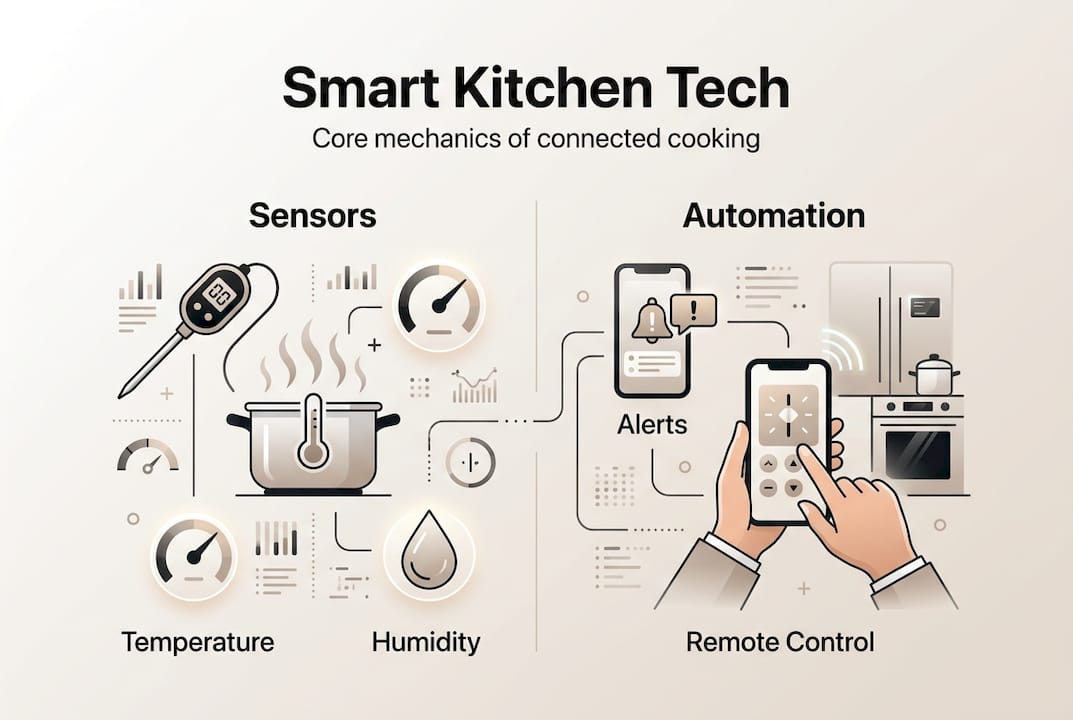
Automation features transform daily cooking routines. You can preheat your oven while driving home, receive alerts when your food is ready, or get recipe suggestions based on ingredients your smart fridge detected. The technology handles repetitive monitoring tasks, freeing you to focus on creative aspects of cooking.
Pro Tip: Start with one IoT device integrated with common voice assistants you already use. A smart multi-cooker or connected oven offers immediate practical benefits without overwhelming your kitchen setup or requiring a complete appliance overhaul.
For home cooks new to connected cooking, the smart kitchen guide 2026 provides detailed insights into building your first smart cooking space. Understanding these fundamentals helps you make informed decisions about which devices truly enhance your cooking versus which are unnecessary additions.
Core technology and mechanics behind smart kitchens
The intelligence in smart kitchens comes from sophisticated sensor arrays and processing systems working behind the scenes. These components monitor conditions, gather data, and execute commands that make connected cooking possible.
Sensors used include DHT11 temp/humidity, MQ-135 gas, IR flame detectors that constantly monitor your cooking environment. Temperature sensors ensure your oven maintains exact heat levels, humidity sensors help with baking precision, and gas sensors provide critical safety monitoring by detecting leaks or incomplete combustion.
Artificial intelligence plays a growing role in modern smart kitchens. AI algorithms analyze your cooking patterns, suggest recipes based on available ingredients, and learn your preferences over time. Some systems can recognize food items through image recognition and recommend optimal cooking methods or alert you when ingredients are expiring.
Precise temperature control represents one of the most valuable smart kitchen features. Modern smart ovens use PID (Proportional-Integral-Derivative) controllers with NTC thermistor arrays that maintain temperatures within ±0.4°C. This level of precision eliminates guesswork and produces consistent results whether you’re baking delicate pastries or roasting meat.
IoT hubs serve as the central nervous system connecting all your devices. These hubs enable different brands and types of appliances to communicate, creating unified control through a single app or voice assistant. Without a hub, you might need separate apps for each device, which quickly becomes impractical.
| Sensor Type | Primary Function | Key Benefit | Typical Cost |
|---|---|---|---|
| Temperature (NTC) | Monitor and regulate heat | Precise cooking results | $15-40 |
| Humidity (DHT11) | Track moisture levels | Better baking outcomes | $10-25 |
| Gas (MQ-135) | Detect leaks and combustion | Enhanced safety | $20-50 |
| Flame (IR) | Identify open flames | Fire prevention | $25-60 |
| Camera | Visual inventory tracking | Reduce food waste | $30-80 |
Multi-sensor fusion combines data from different sensors to create more accurate assessments of cooking conditions. For example, a smart oven might use temperature, humidity, and visual sensors together to determine exactly when your bread reaches perfect doneness. This integration provides better results than any single sensor could achieve alone.
The communication protocols matter too. Wi-Fi offers broader range and faster data transfer but consumes more power. Bluetooth uses less energy and works well for nearby control but has limited range. Zigbee and Z-Wave provide mesh networking that extends coverage throughout your home while maintaining low power consumption.
Pro Tip: Look for multi-sensor fusion features when shopping for smart appliances, as they deliver more accurate cooking results. However, balance this capability against cost, since basic single-sensor devices often suffice for most home cooking needs.
Exploring smart kitchen gadgets helps you understand which sensor technologies provide the most practical value for your cooking style and budget.
Smart kitchen methodologies and practical meal preparation
Smart kitchens change how you approach daily cooking through automation and remote capabilities that save time and improve consistency. These methodologies transform meal preparation from a time-intensive process into a more streamlined experience.
Remote control features let you start, stop, or adjust cooking from anywhere using smartphone apps. Imagine preheating your oven during your commute so it’s ready when you walk through the door, or checking if you turned off the stove without returning home. Methodologies include remote preheat/monitoring via apps that give you control and peace of mind throughout the day.

Inventory-aware cooking represents a breakthrough in meal planning. Smart refrigerators with internal cameras photograph contents each time you close the door, creating a real-time inventory accessible through your phone. Some systems analyze this inventory and suggest recipes using ingredients you already have, reducing food waste and eliminating last-minute grocery runs.
Smart multi-cookers revolutionize one-pot meals by automatically adjusting pressure, temperature, and timing based on what you’re cooking. These devices combine multiple cooking methods (pressure cooking, slow cooking, sautéing, steaming) in one appliance, saving counter space and energy while delivering consistent results.
Emerging robotic assistance takes automation further. Robotic arms use proprioceptive actuators with inverse dynamics control for precise cooking actions like stirring, flipping, or mixing. While still uncommon in home kitchens, these systems show where smart cooking technology is heading.
Steps to integrate smart devices into daily cooking:
- Start with your most-used appliance and upgrade to a smart version
- Connect the device to your home Wi-Fi network and download the manufacturer’s app
- Link the app to your preferred voice assistant for hands-free control
- Experiment with basic remote features like preheating or monitoring
- Gradually explore advanced features like automated cooking programs
- Add complementary devices that integrate with your existing setup
Benefits for home cooks include:
- Consistent cooking results through precise temperature and timing control
- Time savings from remote operation and automated monitoring
- Reduced energy consumption through optimized cooking cycles
- Less food waste via inventory tracking and expiration alerts
- Enhanced safety through automatic shutoff and leak detection
- Expanded recipe possibilities with guided cooking programs
The complete smart kitchen guide offers detailed strategies for implementing these methodologies based on your cooking habits and kitchen layout.
Practical application matters more than having every possible smart feature. Focus on devices that address your specific pain points, whether that’s timing multiple dishes, maintaining precise temperatures, or tracking ingredients. The goal is making cooking more enjoyable and less stressful, not adding complexity for its own sake.
Challenges, nuances, and expert advice on smart kitchens
Smart kitchens offer impressive benefits but come with real limitations you should understand before investing. Being aware of these challenges helps you make smarter purchasing decisions and set realistic expectations.
Connectivity outages limit smart features though basic functions typically remain operational. When your internet goes down, you lose remote control and app-based features, but your oven still bakes and your refrigerator still cools. This dependency on stable connectivity frustrates users who expect seamless operation.
Software obsolescence poses a serious concern. Manufacturers may stop supporting older models with app updates or cloud services, rendering smart features useless while the appliance itself still works perfectly. You might own a five-year-old smart refrigerator that functions fine mechanically but lost its inventory tracking capability because the company discontinued the app.
Repair costs and technical complexity create financial risks. Smart appliances cost 20-50% more than traditional models, and repairs require specialized technicians familiar with both mechanical and electronic systems. A simple heating element replacement in a smart oven might cost triple the price due to integrated circuit boards and proprietary parts.
Privacy concerns stem from data collection practices. Smart appliances gather information about your cooking habits, meal times, and food preferences. This data gets transmitted to manufacturer servers, raising questions about who accesses it and how it’s used. Some devices even include cameras and microphones that could theoretically be compromised.
Common pitfalls to avoid when buying smart devices:
- Purchasing appliances with features you’ll never use just because they’re “smart”
- Ignoring compatibility issues between different brands and ecosystems
- Overlooking subscription fees required for advanced features
- Failing to research manufacturer support history and app reliability
- Buying first-generation smart versions of traditionally simple appliances
Experts emphasize practical auto-sensing features over flashy apps and warn against underused products like smart microwaves or fridges unless core needs are met. A smart oven with precise temperature control delivers daily value, while a smart toaster with 50 browning settings via app likely sits unused.
“Start small with practical devices that solve real problems in your kitchen. A smart multi-cooker or precision oven provides immediate benefits, while a smart refrigerator might be overkill unless you genuinely struggle with inventory management and food waste.”
The smart home practical tips resource offers guidance on avoiding common mistakes when building connected home systems.
Balance is key. Smart features should enhance cooking, not complicate it. Prioritize devices with strong offline functionality, established manufacturer support, and features addressing your actual cooking challenges. Skip gadgets that require constant app interaction or offer minimal improvement over traditional alternatives.
Consider total cost of ownership beyond the purchase price. Factor in potential subscription fees, higher repair costs, and shorter useful life due to software obsolescence. Sometimes a quality traditional appliance plus a simple kitchen timer delivers better long-term value than an over-engineered smart version.
Enhance your smart kitchen experience with Asknik
Building a functional smart kitchen doesn’t require replacing every appliance overnight. Starting with practical tools that streamline meal prep creates immediate benefits while you plan larger upgrades.
Quality measuring tools form the foundation of precise cooking, whether you use smart appliances or traditional equipment. The folding measuring spoon tool combines multiple measurements in one compact design, perfect for following recipes from smart cooking apps or traditional cookbooks. Accurate measurements ensure consistent results that complement the precision your smart devices provide.
Browse the complete selection of kitchen and cooking essentials to find gadgets that enhance your connected cooking setup. From ingredient prep tools to storage solutions, these items work alongside smart technology to create an efficient cooking environment.

Pro Tip: Choosing versatile manual tools alongside smart appliances creates a balanced kitchen that functions perfectly even during connectivity issues or power outages, ensuring you’re never completely dependent on technology.
Smart kitchens work best when supported by reliable basics. Quality knives, proper storage containers, and efficient prep tools multiply the benefits of your connected appliances by making the entire cooking process smoother.
What is a smart kitchen? Frequently asked questions
What exactly makes a kitchen “smart” compared to a regular kitchen?
A smart kitchen uses IoT-enabled appliances that connect via Wi-Fi or Bluetooth to communicate with each other and with you through apps or voice assistants. Unlike regular kitchens where each appliance operates independently, smart kitchens create an integrated ecosystem where devices share information and can be controlled remotely. The smart kitchen detailed guide explains these differences in depth.
Are smart kitchen appliances safe, or do they create new risks?
Smart appliances include enhanced safety features like automatic shutoff, leak detection, and remote monitoring that can prevent accidents. However, they also introduce cybersecurity risks if not properly secured, and connectivity dependence means some safety alerts might not reach you during internet outages. Overall, the physical safety features typically outweigh digital security concerns for most home cooks.
Can I start with just one or two smart devices, or do I need to upgrade everything?
You absolutely can start small and build gradually. A single smart multi-cooker or connected oven provides immediate benefits without requiring a complete kitchen overhaul. Many home cooks begin with one device, learn its features, then add compatible appliances over time as budget allows and needs become clear.
What future trends should I watch for in smart kitchen technology?
Robotic cooking assistants capable of stirring, flipping, and plating represent the next frontier, though they remain expensive for home use. Improved AI that truly understands your preferences and dietary needs will make recipe suggestions more personalized. Better integration between brands through universal standards will reduce the current fragmentation where each manufacturer requires separate apps.
How can I protect my privacy when using smart kitchen appliances?
Review privacy policies before purchasing to understand what data gets collected and shared. Disable cameras and microphones when not actively using them, use strong unique passwords for each device, keep firmware updated, and consider devices that offer local processing rather than cloud-only operation. Some manufacturers allow you to opt out of data collection while retaining basic smart features.
Do smart appliances actually save energy, or do they consume more?
Well-designed smart appliances typically reduce energy consumption through optimized cooking cycles, precise temperature control, and features like remote monitoring that prevent accidentally leaving devices running. However, the constant connectivity and standby power draw offset some savings. Overall, energy-efficient smart models usually consume 10-15% less than traditional appliances during actual cooking, though total savings depend on usage patterns.