
Feeding your pet at the same time every day sounds simple, but life gets in the way. Late work meetings, weekend trips, and unpredictable schedules mean your cat or dog might eat too early, too late, or get double portions when family members forget who already fed them. Irregular feeding raises health risks by 47%, leading to obesity, anxiety, and digestive problems. Smart pet feeders solve this by automating portion control and scheduling through your phone, giving you consistency without the stress. This guide explains how these devices work, their benefits for Greek pet owners, and how to choose the right one for your home.
Table of Contents
- Key takeaways
- What are smart pet feeders and how do they work?
- Key features and benefits for pet owners in Greece
- Challenges and limitations of smart pet feeders
- How to choose and use smart pet feeders effectively in Greece
- Discover smart pet feeders at Asknik
- Frequently asked questions
Key Takeaways
| Point | Details |
|---|---|
| Portion control reduces overfeeding | Smart feeders automate portions to lower obesity risk and related health issues. |
| Remote scheduling and monitoring | Mobile apps let you set meal times and track feeding activity from anywhere. |
| Cameras and two way audio | Video and audio features help you monitor meals and ease pet anxiety during automation. |
| Limitations and cost | Glitches and upfront costs can affect reliability and suitability for some pets. |
What are smart pet feeders and how do they work?
Smart pet feeders dispense preset food portions using three main mechanisms. Gravity feeders rely on weight to release kibble as your pet eats, but they lack portion control. Motorized auger systems use a rotating screw to measure and drop exact amounts of food into the bowl at scheduled times. Rotating tray feeders divide meals into compartments that open on a timer, ideal for wet food or multiple small portions throughout the day.
The technology behind these devices centers on WiFi connectivity and mobile apps. You set feeding schedules, portion sizes, and meal frequencies through your phone, even when you’re away from home. Most models connect to 2.4 GHz WiFi networks, which offer better range than 5 GHz but require checking your router settings. Built-in sensors detect when food runs low or if a jam occurs, sending alerts to your app so you can fix problems before your pet misses a meal.
Advanced features include cameras with two-way audio, letting you see your pet and talk to them during feeding time. Some feeders use motion sensors to detect when your pet approaches the bowl, triggering a video recording you can review later. Battery backup systems keep scheduled feedings running during power outages, preventing missed meals. Airtight storage containers preserve food freshness and block moisture, especially important in Greece’s humid coastal regions.
Pro Tip: Start with dry kibble feeders because they jam less often and require simpler cleaning than wet food models. Kibble size matters, most feeders handle pieces between 5mm and 15mm, so check your pet’s current food before buying.
The pet gadget usage guide explains how to integrate feeders with other smart devices in your home. Look for feeders with stainless steel bowls instead of plastic, which scratches easily and harbors bacteria. Timer accuracy varies by model, with better units keeping schedules within 30 seconds over 24 hours. Voice recording features let you call your pet to meals using your own voice, reducing anxiety for pets adjusting to automated feeding.
Key features and benefits for pet owners in Greece
Portion control reduces overfeeding by 20-30%, directly lowering obesity risks and the behavioral problems that come with weight gain. You program exact gram measurements per meal, eliminating guesswork and preventing well-meaning family members from adding extra food. Most feeders dispense portions from 10 grams to 200 grams per serving, suitable for cats and small to medium dogs.
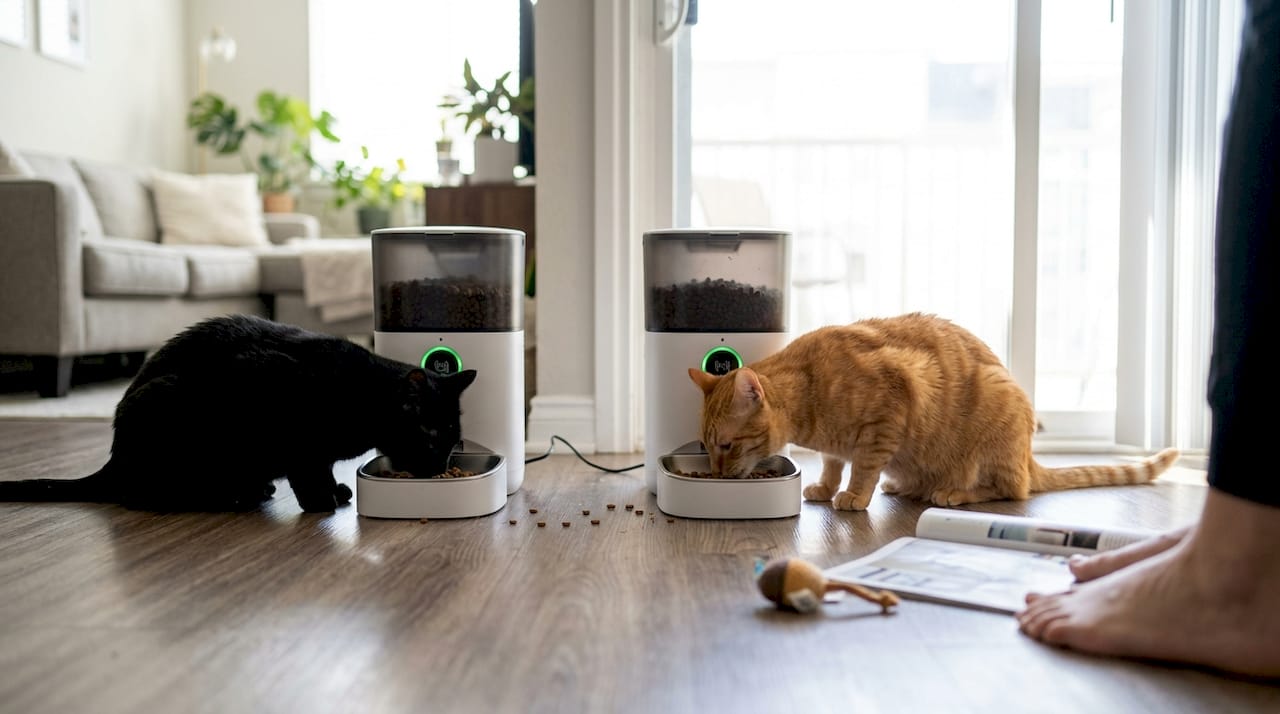
Greek pet owners face unique scheduling challenges. Tourism industry workers deal with irregular shifts during summer months. Commuters in Athens spend hours in traffic. Smart feeders solve these problems by maintaining consistent meal times regardless of your location. Your pet eats at 8am and 6pm every day, even when you’re stuck at work or traveling to the islands for a long weekend.
Key features that deliver real value include:
- Airtight storage containers holding 2 to 6 liters of dry food, lasting 3 to 10 days depending on pet size
- Battery backup using 3 to 6 D-cell batteries, powering 30 to 90 days of scheduled feedings during outages
- WiFi app control compatible with iOS and Android, letting you adjust portions and timing remotely
- Feeding history logs tracking when and how much your pet ate, useful for vet appointments
- Low food alerts notifying you 24 hours before the hopper runs empty
Two-way audio and camera features transform feeding into interactive experiences. You can watch your pet eat lunch from your office and reassure anxious animals with your voice. Night vision cameras work in dark rooms, and some models offer 1080p video quality. Recording capabilities let you review footage if your pet seems unwell or refuses food.
RFID and microchip technology prevents food theft in multi-pet households. The feeder reads your pet’s existing microchip or a collar tag, opening the lid only for the designated animal. This stops greedy cats from stealing their sibling’s prescription diet or prevents large dogs from eating the small dog’s portions. You can program different meal sizes and schedules for each pet using the same device.
Irregular manual feeding creates stress that manifests as begging, food aggression, and digestive upset. Consistency reduces these health risks by 47%, giving pets predictable routines that match their natural hunger cycles. Greek apartments often house multiple pets in limited space, making behavioral issues from feeding competition particularly disruptive.
EU plug compatibility matters for Greek buyers. Verify the feeder uses 220-240V power and includes a Type C or Type F plug before purchasing from international sellers. Some models ship with US plugs requiring adapters that add bulk and create failure points. The pet health tracking devices guide covers how to combine feeders with activity monitors for complete wellness management.
Challenges and limitations of smart pet feeders
Smart feeders offer convenience but come with trade-offs compared to traditional bowls and manual feeding routines.
| Feature | Smart feeders | Traditional feeding |
|---|---|---|
| Reliability | Depends on WiFi and power, prone to jams | Always works, no technical failures |
| Cost | €80-250 initial plus €20-40 yearly maintenance | €5-20 one-time bowl purchase |
| Portion accuracy | Precise to 5-10 grams | Varies by human measurement |
| Setup complexity | Requires app installation and WiFi configuration | Immediate use, no setup |
| Wet food compatibility | Limited, needs daily cleaning and refrigeration | Handles any food type easily |
Common technical problems include kibble jams from oversized or irregularly shaped pieces blocking the dispensing mechanism. Oily or moist kibble clumps together, creating blockages that stop feeding until you manually clear the auger. WiFi connectivity drops if your router switches between 2.4 GHz and 5 GHz bands automatically, requiring you to create a dedicated 2.4 GHz network name.
Wet food presents significant challenges. Most smart feeders lack refrigeration, so wet food spoils within 2 to 4 hours at room temperature, especially during Greek summers reaching 35°C to 40°C. Rotating tray models with ice packs extend freshness to 6 to 8 hours but require daily refilling and thorough washing to prevent bacterial growth. Wet food also gums up motorized mechanisms faster than dry kibble.
Multi-pet households without RFID face food theft problems. Dominant pets guard the feeder or eat immediately after it dispenses, leaving submissive animals hungry. Cats quickly learn feeding schedules and wait by the bowl, defeating the purpose of automated portion control. Smart feeders cost €80 to €250 depending on features, with RFID models at the higher end and basic timer feeders starting around €80.
Maintenance requirements include:
- Weekly disassembly and washing of bowls, hoppers, and dispensing mechanisms
- Monthly deep cleaning with pet-safe disinfectant to remove oil residue
- Quarterly battery replacement for backup power systems
- Annual inspection of motor components and sensors for wear
Pro Tip: Transition your pet gradually over 7 days by placing the smart feeder next to their regular bowl and slowly shifting food portions from manual to automated feeding. Sudden changes cause stress and food refusal, especially in cats.
Smart feeders never replace human interaction. Pets need daily attention, play, and health monitoring that automated devices can’t provide. Some animals fear the motor noise or flashing lights, refusing to approach the feeder. Large breed dogs over 30 kilograms often require more food than standard hoppers hold, necessitating daily refills that reduce convenience. The pet gadget usage guide offers strategies to address these limitations through proper device selection and training.
How to choose and use smart pet feeders effectively in Greece
Selecting the right smart feeder starts with matching device capacity to your pet’s needs. Small cats eating 60 grams daily need 2-liter hoppers refilled weekly. Medium dogs consuming 300 grams daily require 4 to 6-liter capacities for the same convenience. Measure your current kibble size with a ruler because feeders specify compatible dimensions, typically 5mm to 15mm diameter.
Follow these steps for successful setup:
- Unbox the feeder and wash all food-contact surfaces with warm soapy water before first use
- Download the manufacturer’s app and create an account using a strong password
- Connect the feeder to your 2.4 GHz WiFi network by entering credentials in the app
- Set your time zone to Athens (GMT+2 or GMT+3 during daylight saving) for accurate scheduling
- Program initial feeding times and portion sizes based on your vet’s recommendations
- Test the dispenser manually through the app to verify portion accuracy
- Insert backup batteries and confirm the app shows battery status
WiFi setup fails when routers use band steering or smart connect features that automatically switch devices between 2.4 GHz and 5 GHz. Access your router settings and create a separate 2.4 GHz network with a unique name, or disable band steering temporarily during feeder setup. Place the feeder within 10 meters of your router for reliable connectivity, avoiding thick walls and metal appliances that block signals.
Cleaning routines prevent mechanical failures and food contamination:
- Remove and wash the bowl after each feeding if using wet food, or daily for dry kibble
- Wipe the dispensing chute weekly with a damp cloth to remove kibble dust and oil
- Empty the hopper monthly and vacuum out fine particles that accumulate at the bottom
- Inspect the auger or rotating mechanism for cracks or worn teeth every 3 months
Gradual pet transition over 7 days reduces stress and food refusal. Days 1 to 2, place the unplugged feeder next to your pet’s regular bowl so they investigate it without pressure. Days 3 to 4, serve 25% of their food from the feeder and 75% from the regular bowl. Days 5 to 6, shift to 75% from the feeder. Day 7, complete the transition to 100% automated feeding. Talk to your pet during feeder meals and offer praise to create positive associations.
Best practices for multi-pet homes include:
- Position RFID feeders in separate rooms to prevent intimidation and food guarding
- Set staggered feeding times 15 to 30 minutes apart so pets don’t compete
- Monitor initial weeks closely to ensure each pet accesses their designated feeder
- Keep backup batteries fresh by replacing every 3 months regardless of app warnings
Pro Tip: Weekly cleaning prevents 90% of mechanical issues, according to user reports. Spend 10 minutes every Sunday washing components, and your feeder will last its full 3 to 5-year lifespan without major problems.
Smart feeders last 3 to 5 years with proper maintenance and work best for dry kibble and pets comfortable with device sounds. Start with basic models if you’re unsure about your pet’s acceptance. Greek electrical standards use 220-240V, so verify voltage compatibility before buying international models. The pet gadget usage guide provides detailed troubleshooting for common setup problems.
Consider local conditions when choosing features. Coastal humidity requires airtight storage with silica packets to prevent kibble from becoming stale. Apartments with frequent power cuts benefit from long-lasting battery backup systems. The automatic pet feeder with timer available through Greek retailers includes EU plugs and local warranty support, eliminating compatibility concerns.
Discover smart pet feeders at Asknik
Managing your pet’s feeding schedule just got easier. Asknik offers reliable smart pet feeders designed for Greek homes, with EU-compatible plugs and straightforward app controls that work with your existing WiFi network. Whether you need portion control for an overweight cat or scheduled feeding for a dog with diabetes, you’ll find feeders suited to different pet sizes and dietary requirements.
Our selection includes RFID-enabled models for multi-pet households and camera-equipped feeders for remote monitoring. Browse kitchen and cooking essentials to discover storage containers and measuring tools that complement your pet care routine. The automatic pet feeder with timer features stainless steel bowls and precise portion control, backed by free shipping across Greece. Visit the pet gadget usage guide for setup tutorials and maintenance tips specific to Greek conditions.
Frequently asked questions
Are smart pet feeders suitable for all pets?
Smart feeders work best for cats and small to medium dogs that eat dry kibble and tolerate device sounds. They’re ideal for pets with consistent appetites and regular eating patterns. Large breed dogs over 30 kilograms may require multiple daily refills, reducing convenience. Noise-sensitive pets or those with anxiety might refuse to approach motorized feeders initially, though gradual introduction over 7 to 10 days usually resolves this.
How do smart pet feeders handle multiple pets in one household?
RFID and microchip sensors restrict food access to specific pets by reading their existing identification chips or collar tags. The feeder lid opens only when the designated pet approaches, preventing food theft and allowing individual portion control. You can program different meal sizes and schedules for each pet through the app. Position feeders in separate rooms if pets show food aggression or intimidation behaviors.
Can I use a smart feeder if my WiFi is unstable?
Most smart feeders require 2.4 GHz WiFi for app-based scheduling and remote control features. Unstable connections cause missed schedule updates and prevent real-time monitoring. However, battery backup systems maintain programmed feeding schedules during power outages or temporary WiFi drops, ensuring your pet doesn’t miss meals. Once you set a schedule, it stores in the feeder’s internal memory and runs independently until you make changes through the app.
What maintenance do smart pet feeders need?
Wash food bowls and dispensing components weekly with warm soapy water to prevent oil buildup and bacterial growth. Empty the hopper monthly to vacuum out fine kibble dust that accumulates at the bottom. Replace backup batteries every 3 months to ensure reliable operation during power cuts. Inspect motorized parts quarterly for wear, checking auger teeth and rotating mechanisms for cracks. Deep clean with pet-safe disinfectant every 2 to 3 months, especially in humid coastal regions where mold grows faster.