
TL;DR:
- Modern pet tech devices utilize various sensors to monitor pets’ health, location, and behavior continuously.
- Sensor data enables proactive care by detecting early signs of illness, stress, or escape risks.
- Owners should balance trust and skepticism, focusing on trends and consulting vets for significant concerns.
Smart pet technology is no longer a niche hobby for tech enthusiasts. 67% of pet owners now use some form of pet tech in their daily routines, and that number keeps climbing. Yet many pet owners in Greece still treat these gadgets as optional extras rather than genuine tools for proactive care. The truth is, the sensors inside these devices are doing serious work, quietly tracking your pet’s health, location, and behavior around the clock. This article breaks down exactly which sensors power modern pet gadgets, how they work in practice, what real benefits they deliver, and what to check before you buy.
Table of Contents
- Types of sensors inside modern pet gadgets
- How sensor technology works in real pet gadgets
- Everyday benefits: What sensors mean for proactive pet care
- Sensor challenges and what to consider before you buy
- Our view: What most pet owners get wrong about pet sensors
- Upgrade your pet care with trusted technology
- Frequently asked questions
Key Takeaways
| Point | Details |
|---|---|
| Sensor variety matters | Different sensors detect vital signs, activity, food, or presence to give you a complete view of your pet’s needs. |
| Data adds real value | Accurate, app-based tracking helps prevent illness, manage safety, and make feeding or exercise truly effortless. |
| Know tech limits | Gadget data enhances care but doesn’t replace your veterinarian, and false alarms or privacy issues remain important. |
| Choose multi-sensor devices | Devices that integrate multiple sensors and allow sharing with vets deliver the most reliable results for your pet. |
Types of sensors inside modern pet gadgets
Understanding the actual sensors inside these devices is the first step toward using them well. Modern pet tech gadgets pack a surprising amount of sensing hardware into compact, wearable, or home-based form factors.
Here is a quick breakdown of the most common sensor types you will find:
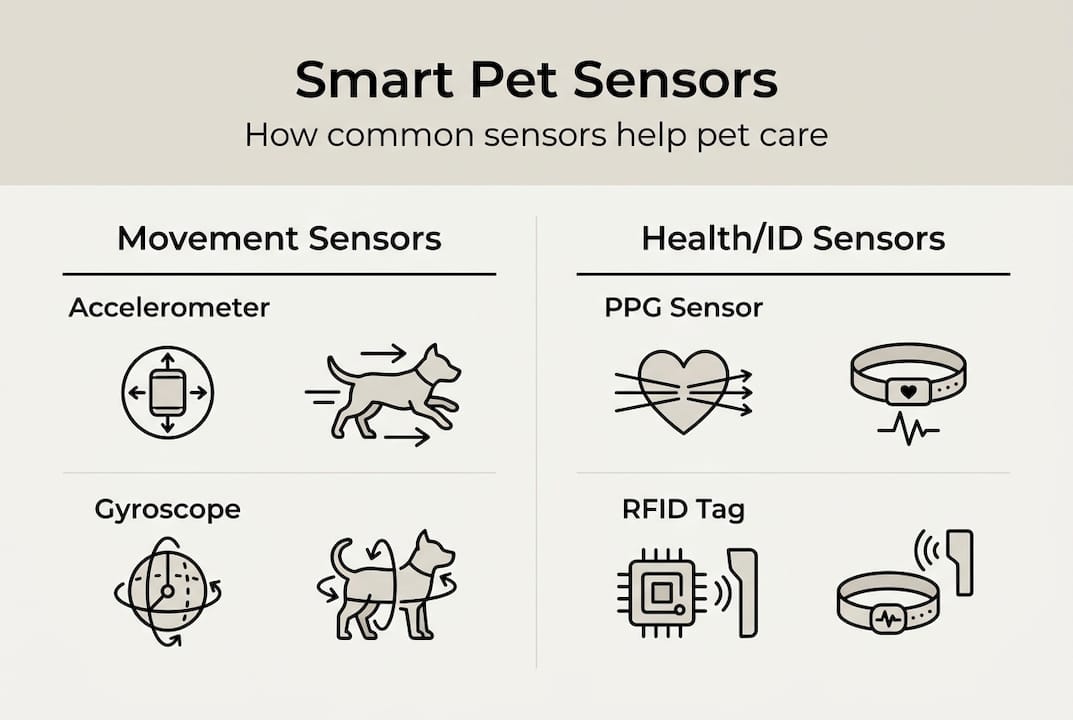
- Accelerometer: Detects movement, activity levels, and sleep patterns. Found in most GPS collars and activity trackers.
- GPS module: Tracks real-time location and movement range. Standard in escape-prevention collars.
- PPG (photoplethysmography) / optical sensor: Uses light to measure heart rate and respiratory rate non-invasively. Found in advanced health collars.
- Thermometer: Monitors body or ambient temperature. Used in smart kennels and some wearables.
- Load cell: Measures weight and food portions. Built into smart feeders and water dispensers.
- Ultrasonic / motion sensor: Detects presence and movement nearby. Common in automatic doors and feeders.
- RFID / microchip reader: Identifies individual pets by their microchip or tag. Used in selective pet doors and feeders.
As wearable gadgets revolutionize pet health monitoring, the range of sensors available in retail products keeps expanding. The table below maps each sensor to its function and the type of gadget where you will typically find it.
| Sensor type | What it detects | Typical gadget |
|---|---|---|
| Accelerometer | Movement, activity, sleep | GPS collar, activity tracker |
| GPS module | Location, escape zone | Smart collar |
| PPG / optical | Heart rate, respiratory rate | Health monitoring collar |
| Thermometer | Body or ambient temperature | Smart kennel, wearable |
| Load cell | Food weight, portion size | Smart feeder |
| Ultrasonic / motion | Presence, nearby movement | Automatic pet door, feeder |
| RFID / microchip | Pet identity | Selective feeder, pet door |
These sensor types cover everything from basic activity logging to precise health monitoring. A single smart collar can combine accelerometer, GPS, and PPG sensors, giving you a multi-layered view of your pet’s wellbeing from one device.
How sensor technology works in real pet gadgets
Knowing which sensors are used is helpful, but understanding how they work in practice is what helps you make better buying decisions.
Accelerometers measure tiny changes in gravitational force as your pet moves. Algorithms then classify that raw movement data into categories like walking, running, resting, or scratching. Movement classification accuracy exceeds 90% in well-designed devices, which means the activity logs you see in the app are genuinely reliable.
GPS modules use satellite signals to calculate your pet’s position. Median location error sits around 10 meters in open areas, though urban environments with tall buildings can increase that margin. Always treat GPS alerts as a strong indicator, not a pinpoint guarantee.
PPG sensors shine a small LED light onto your pet’s skin and measure how much light is reflected back. Changes in blood flow alter the reflection, allowing the device to calculate heart rate and respiratory rate without any needles or probes. PPG-based HRV accuracy reaches 87%, making it a solid baseline tool for stress and health tracking.
RFID readers emit a short-range radio signal that activates a passive chip in your pet’s microchip or tag. The scan success rate for RFID is 99.7%, which is why microchip-activated pet doors are so reliable in multi-pet households.
Load cells use tiny pressure sensors to weigh food as it is dispensed, ensuring consistent portions every meal.
For a side-by-side look at how different devices compare in real conditions, this device accuracy comparison is worth reviewing before you buy.
Pro Tip: Choose devices that combine multiple sensors in one unit. Multi-sensor fusion means the app can cross-check data from two or more sources before sending you an alert, which dramatically reduces false positives. Our pet gadget usage guide covers which top smart pet products use this approach effectively.
With 67% of owners already using pet tech, sensor-driven care is quickly becoming the standard, not the exception.

Everyday benefits: What sensors mean for proactive pet care
With the technology explained, let’s see how these sensors translate into daily value for you and your pet.
The biggest shift sensors bring is moving from reactive to proactive care. Instead of noticing something is wrong after the fact, you get early alerts that allow you to act before a small issue becomes a serious one.
Here are concrete examples of what sensors can do in daily life:
- Detect heat stress early by monitoring body temperature during hot Greek summers, especially for brachycephalic breeds.
- Catch midnight snacking through load cell alerts on smart feeders, helping prevent obesity in indoor cats and dogs.
- Prevent escapes with GPS geofencing that sends an instant notification if your pet crosses a set boundary.
- Identify unusual inactivity via accelerometer data that flags significant drops in movement, which can be an early sign of illness or pain.
- Control multi-pet feeding using RFID-activated feeders that only open for the correct pet, preventing food stealing.
- Monitor stress remotely through PPG-based HRV readings while you are at work or traveling.
Sensors enable early detection of illness, behavior changes, obesity risk, and escape attempts, all from your phone. For busy owners in Greece who travel or work long hours, this kind of at-a-glance reassurance is genuinely valuable.
That said, it is important to keep perspective. As veterinary experts note, smart devices complement but do not replace professional veterinary advice. Sensors flag patterns; vets interpret them.
Pro Tip: Export your device’s data report before your next vet visit. Many vets find historical activity, temperature, and heart rate trends extremely useful when diagnosing chronic or intermittent conditions. Our pet health tracking devices guide explains exactly how to do this.
The future of pet tech points toward even tighter integration between home sensors and veterinary platforms, making data sharing easier than ever.
Sensor challenges and what to consider before you buy
Even with all their benefits, no technology is perfect. Consider these real challenges before choosing your next device.
Common sensor pitfalls to be aware of:
- False alerts: GPS noise and accelerometer misreads can trigger unnecessary notifications, especially in dense urban areas like Athens or Thessaloniki.
- Fit and comfort: A poorly fitted collar or wearable can cause skin irritation or inaccurate readings. Always check the recommended weight range for your pet.
- Charging hassle: Most sensor devices need regular charging. A dead battery means zero data, often at the worst possible time.
- Data privacy: Not all brands are transparent about how they store or use your pet’s data. Read the privacy policy before purchasing.
What to check before you buy:
- Does the brand publish accuracy data for its sensors?
- Does the device use multi-sensor fusion to reduce false positives?
- Is the mobile app well-reviewed and regularly updated?
- Can you export data to share with your vet?
- What is the battery life under typical daily use?
GPS inaccuracy and sensor misreads are particularly relevant for owners in Greek cities, where tall buildings and narrow streets can interfere with satellite signals. Urban pet owners should prioritize devices that use additional sensors alongside GPS to confirm location alerts.
For multi-pet households, RFID compatibility and selective feeding features are worth the extra cost. And for owners who travel frequently, long battery life and cellular connectivity matter more than raw sensor count. Our roundup of top smart pet products highlights which devices handle these scenarios best.
Our view: What most pet owners get wrong about pet sensors
We have seen two opposite mistakes play out repeatedly. The first is overtrusting sensor data. Some owners treat every app notification as a medical diagnosis, rushing to the vet over a single unusual reading that turns out to be a glitch or a false positive. Sensors are measurement tools, not oracles.
The second mistake is ignoring early alerts entirely. Many owners dismiss repeated low-activity flags or temperature anomalies as “probably nothing,” missing exactly the kind of early warning signal these devices exist to provide.
The right approach sits in the middle. Use sensor data as a starting point for care decisions, not the final word. When your device flags something unusual two or three times in a row, that is worth a call to your vet. When it fires once and your pet seems perfectly fine, note it and keep watching.
We also believe that most owners underuse the historical data their devices collect. Trends over weeks and months are far more valuable than any single reading. If you are not regularly reviewing your app’s trend graphs, you are leaving the most useful part of the technology unused. Explore smart solutions for modern owners to see how to get the most from your devices.
Upgrade your pet care with trusted technology
If you are ready to bring smarter routines into your pet’s daily life, we have got you covered. At AskNik.gr, we carefully select tech products that combine real functionality with ease of use, so you spend less time troubleshooting and more time enjoying peace of mind.

Our catalog includes smart home gadgets, pet accessories, and kitchen essentials, all quality-checked and available with free shipping across Greece. Whether you are starting with your first smart feeder or adding a GPS collar to your setup, our team is here to help you choose the right fit. Browse our smart essentials and find the products that match your lifestyle and your pet’s needs. Fast shipping, secure payments, and friendly support are always included.
Frequently asked questions
How accurate are pet gadget sensors in real daily use?
Movement sensors exceed 90% accuracy and RFID achieves up to 99.7% scan success, but GPS median error of 10 meters means location alerts should always be cross-checked with other sensor data before acting.
Are sensor pet gadgets safe and comfortable for all pets?
Most retail gadgets are safe, but always verify fit and weight limits for your specific pet’s size, and monitor for any skin irritation or discomfort after introducing a new wearable device.
Can sensor-equipped gadgets replace my veterinarian?
No. Smart devices complement, not replace veterinary care. They provide early alerts and useful trend data, but professional diagnosis and treatment always require a qualified vet.
What should I look for when choosing a smart pet gadget?
Prioritize devices with published accuracy data, multi-sensor fusion capability, a well-supported app, and the ability to export health data to share directly with your veterinarian.
Is my pet’s data safe with these gadgets?
Data privacy varies by brand. Always review the privacy policy before purchasing, and choose companies with transparent data practices that clearly explain how your pet’s information is stored and used.