
TL;DR:
- Pet water fountains encourage pets to drink more, supporting kidney and urinary health.
- Choose dispensers with stainless steel, EU voltage, quiet operation, and large capacity for Greek homes.
- Regular cleaning and maintenance are essential to prevent bacterial growth and filter clogging.
Many pet owners in Greece are surprised to learn that their dogs and cats may be chronically mildly dehydrated, especially during the country’s long, hot summers. Water fountains increase intake significantly compared to standing bowls, yet most owners still rely on a simple dish. Choosing the right water dispenser can feel confusing, with so many types, smart features, and compatibility questions in the mix. This guide breaks down everything you need to know, from basic gravity models to WiFi-enabled smart fountains, so you can make a confident, informed choice for your pet’s health.
Table of Contents
- Why hydration matters: The science behind water dispensers
- Types of pet water dispensers: Classic vs. smart models
- Key smart features and innovations for Greek homes
- Selecting, maintaining, and troubleshooting your dispenser
- Our take: What most guides miss about pet hydration in Greece
- Find the ideal hydration solution for your pet
- Frequently asked questions
Key Takeaways
| Point | Details |
|---|---|
| Smart dispensers boost hydration | Fountain designs encourage pets to drink more, supporting kidney and urinary health. |
| Choose for Greek conditions | Prioritize EU-voltage, stainless steel, and quiet models to suit local water and power needs. |
| Routine maintenance prevents issues | Cleaning and regular filter changes keep water fresh and reduce risk of clogs or bacteria. |
| Consider smart features | App tracking and notifications help busy owners ensure year-round pet hydration, especially during hot Greek summers. |
Why hydration matters: The science behind water dispensers
Water is not optional for your pet. It supports kidney function, digestion, temperature regulation, and joint health. The general rule is that dogs need about 50 to 60 ml of water per kilogram of body weight daily, while cats need roughly 40 to 60 ml per kilogram. Pets eating dry kibble need considerably more water than those on wet food diets, because dry food contains only about 10% moisture versus 70 to 80% in wet food.
Greece’s climate makes this even more urgent. Summer temperatures regularly exceed 35°C in many regions, and even indoor pets face heat stress. Dehydration in this environment is not just uncomfortable. It can lead to serious health consequences fast.
Here is why water dispensers make a real difference:
- Flowing water attracts pets. Cats and dogs are instinctively drawn to moving water, which signals freshness in the wild.
- Fountains keep water cooler and oxygenated, making it more appealing throughout the day.
- Consistent access means pets drink in smaller, more frequent amounts, which is healthier for the kidneys.
- Filtration removes chlorine and debris, improving taste and reducing bacterial growth.
Urine supersaturation risks and related kidney stones are reduced when pets drink more consistently through fountain use. This is especially relevant for cats, who are naturally low-thirst animals and prone to urinary tract issues. Veterinarians also note that water fountains help prevent FLUTD, a painful and potentially dangerous feline lower urinary tract disease, by encouraging better daily intake.
“The single most impactful thing many cat owners can do for long-term health is simply get their cat drinking more water. A fountain is the easiest way to do that.” — Veterinary nutrition specialist
One thing worth noting: some pets take a few days to accept a new dispenser. Keep a backup bowl nearby during the transition period. Pair a water dispenser with automated pet feeders benefits for a complete, low-effort daily care routine.
Types of pet water dispensers: Classic vs. smart models
Not all dispensers are created equal. Understanding the main categories helps you match the right product to your home, your pet, and your lifestyle.
Gravity-based dispensers are the simplest option. They use a reservoir that refills a bowl automatically as water is consumed. No electricity needed, no pump, and very little maintenance. They work well for owners who travel frequently or want a completely silent solution. The downside is that water sits still, which is less appealing to many pets and can allow bacteria to grow faster.
Pump-powered fountains circulate water continuously, keeping it fresh and oxygenated. These are the most popular mid-range option. They require electricity and regular filter changes, but they genuinely encourage more drinking. Noise level varies by model, so check decibel ratings before buying.
Smart or WiFi-enabled models are the newest category. They connect to an app on your phone, allowing you to monitor water levels, track your pet’s drinking habits, and receive alerts when the filter needs replacing. Some models even log daily intake data.
| Feature | Classic/gravity | Pump fountain | Smart fountain |
|---|---|---|---|
| Electricity required | No | Yes | Yes |
| Water circulation | No | Yes | Yes |
| App monitoring | No | No | Yes |
| Filter system | Basic or none | Standard | Advanced |
| Noise level | Silent | Low to moderate | Very low |
| Price range | Budget | Mid-range | Premium |
| Best for | Travel, backup | Most households | Tech-forward owners |
Expert benchmarks for best pet fountains highlight quiet, easy-to-clean options like the Petlibro Capsule, stainless steel picks like the Pioneer Pet Raindrop, and large-capacity choices like the PetSafe Drinkwell for multi-pet homes.
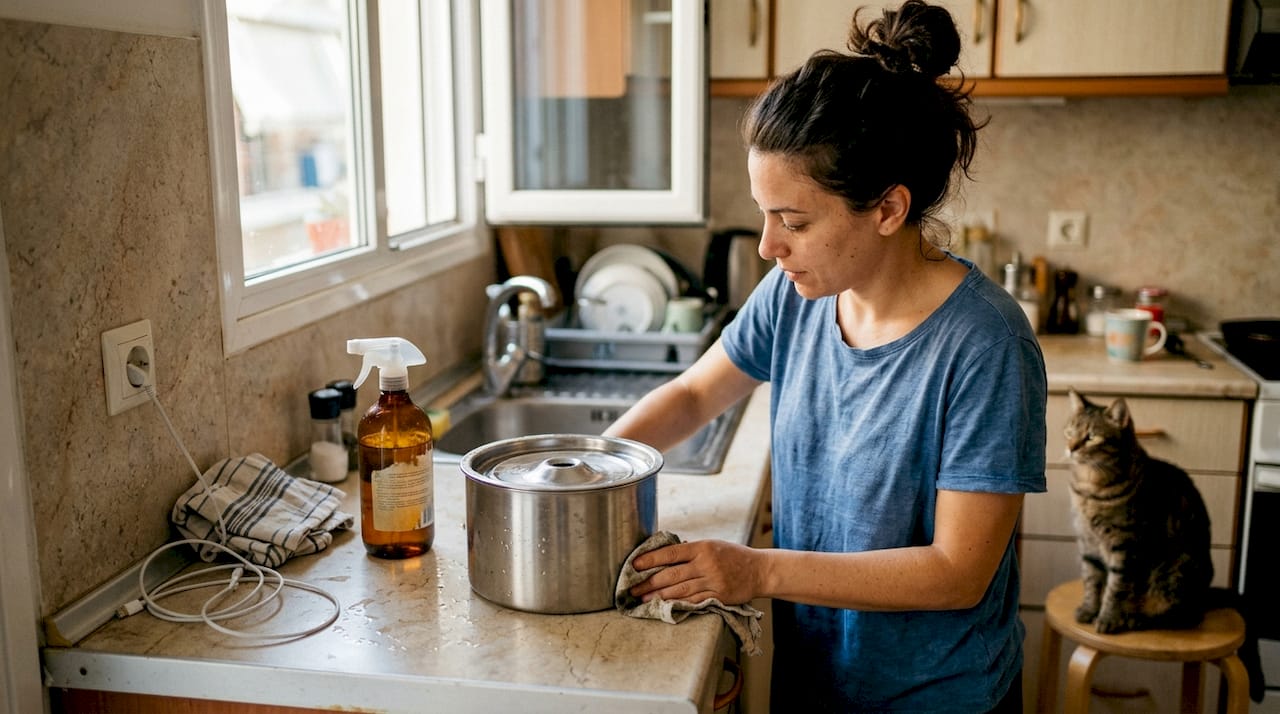
Pro Tip: If you live in an area with frequent power cuts, choose a model with battery backup or keep a gravity dispenser as a secondary option. You can also explore our automatic pet water dispenser and portable dog water bowls for flexible hydration solutions on the go.
Key smart features and innovations for Greek homes
Smart dispensers have moved well beyond simple timers. Today’s top models offer a range of features that are genuinely useful, especially for busy owners in Greek cities like Athens or Thessaloniki.
Here is what to look for:
- App integration and remote monitoring. App-based remote monitoring lets you check water levels and receive filter alerts from anywhere, which is especially helpful during long summer days when you are away from home.
- EU voltage compatibility (220-240V). Always confirm the product is rated for European electrical standards. Many imported models are designed for 110V and require a converter.
- Stainless steel construction. Stainless steel resists mineral deposits far better than plastic, which matters in Greece where tap water is notoriously hard in many regions.
- Multi-stage filtration. Look for activated carbon and ion exchange filters to handle chlorine, calcium, and bacteria.
- Quiet operation under 30dB. Noisy pumps stress pets and disrupt households. Aim for models rated below 30 decibels.
- Large capacity (3 liters or more). Larger reservoirs mean fewer refills, especially important during summer or for multi-pet households.
| Feature | Why it matters for Greece |
|---|---|
| EU voltage (220-240V) | Safe operation without converters |
| Stainless steel | Resists hard water mineral buildup |
| App notifications | Monitor remotely during hot days |
| Multi-stage filter | Handles chlorine and calcium in tap water |
| 3L+ capacity | Fewer refills in summer heat |
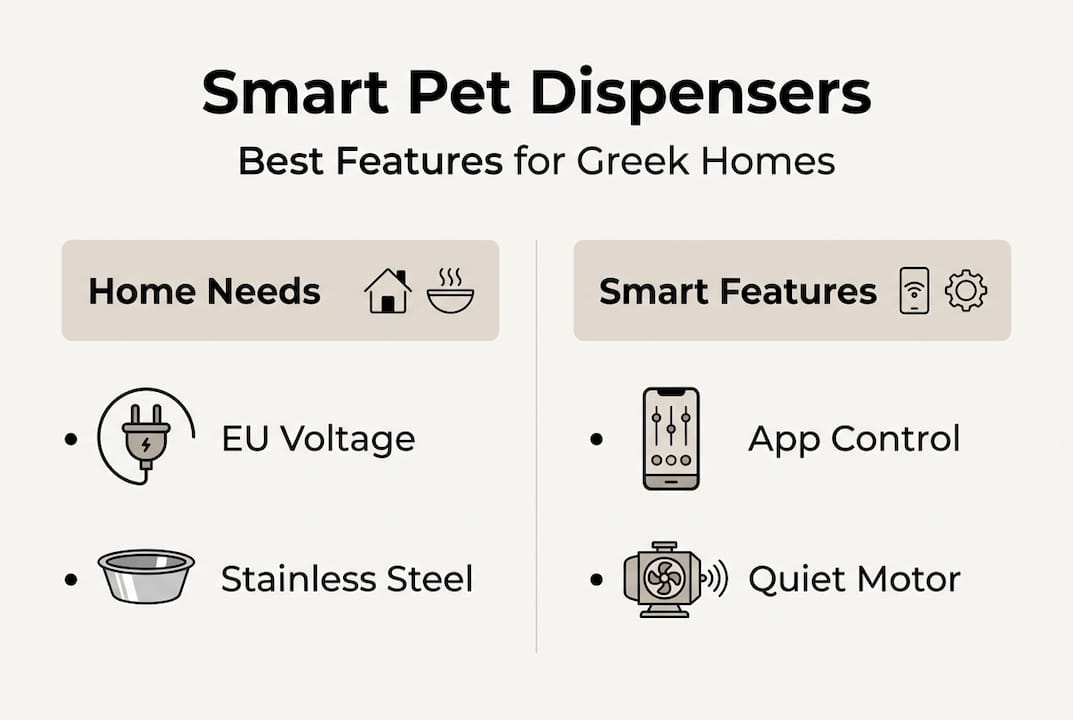
Pro Tip: In summer, rinse the dispenser reservoir every 3 to 4 days instead of weekly. High temperatures accelerate bacterial growth, and stainless steel models make this quick cleaning much easier. Explore the benefits of pet gadgets and our guide to smart pet accessories for more ideas on upgrading your pet care setup.
Selecting, maintaining, and troubleshooting your dispenser
Choosing the right dispenser starts with a simple checklist. Before you buy, ask yourself these questions:
- How many pets do you have? Multi-pet homes need at least 7 liters of capacity and a robust pump.
- What is your tap water like? Hard water areas need stainless steel and strong filtration.
- How often can you clean it? If you travel frequently, a gravity model or one with a large reservoir is more practical.
- Is noise a concern? Check decibel ratings. Anything over 40dB can disturb light-sleeping pets and owners.
- Do you want app connectivity? Smart models cost more but offer real peace of mind.
For maintenance, the golden rule is simple. Filters not cleaned every 2 to 4 weeks lead to clogs, increased noise, and bacterial contamination. Set a phone reminder so it does not slip through the cracks.
Here is a quick maintenance routine:
- Every week: Rinse the bowl and outer casing.
- Every 2 to 4 weeks: Replace the filter cartridge and deep-clean the pump.
- Every month: Descale with a diluted white vinegar solution to remove mineral buildup from hard water.
For troubleshooting common issues:
- Gurgling or loud noise: Usually caused by low water level or a clogged pump. Top up the water and clean the pump intake.
- Reduced flow: Filter is saturated. Replace it immediately.
- Algae or slime: Increase cleaning frequency and move the dispenser away from direct sunlight.
“Always introduce a new dispenser gradually. Leave it next to the old bowl for a few days before removing the bowl entirely. Pets adapt on their own timeline.” — Pet behavior consultant
For outings or travel, portable water solutions are a smart complement to your home setup, ensuring your pet stays hydrated wherever you go.
Our take: What most guides miss about pet hydration in Greece
Most buying guides focus on features and brand comparisons. What they rarely address is how local conditions in Greece actually shape the right choice.
Greece’s hard water is a real factor. Calcium and magnesium deposits build up faster here than in many northern European countries, shortening pump life and clogging filters more quickly. Plastic dispensers that look fine in product photos often show mineral staining within weeks in Greek homes. Stainless steel is not just a premium aesthetic choice here. It is a practical necessity.
Smart features are only useful if they are easy to use consistently. An app that requires constant updates or a dispenser that is difficult to disassemble for cleaning will get abandoned. Simplicity and durability matter more than flashy specs.
We also think most owners underestimate seasonal variation. Your pet’s hydration needs in January are very different from those in August. A single dispenser may not be enough during peak summer. Doubling up with extra bowls and keeping a gravity backup is practical, not excessive. Our Greek smart pet care guide covers more ways to adapt your setup across seasons.
Find the ideal hydration solution for your pet
Your pet’s health starts with the basics, and clean, fresh water available around the clock is one of the most important. Now that you understand the types, features, and maintenance needs, you are ready to make a smart choice.
At AskNik.gr, we carry a curated selection of EU-compatible, high-quality hydration solutions designed for real Greek households. Browse our pet water dispensers and more to find options that match your pet’s size, your home’s water quality, and your daily routine. Free shipping and quality-checked products make it easy to upgrade your pet’s care today.
Frequently asked questions
How often should I clean and replace filters in my pet water dispenser?
Clean dispensers and replace filters every 2 to 4 weeks for best performance and hygiene. In Greece’s warm climate, pumps clog faster without regular maintenance, so staying on schedule is especially important.
Do smart dispensers really help pets drink more water?
Yes. Fountains increase water intake and reduce urine supersaturation, which directly supports kidney and urinary health in both cats and dogs.
What features should I prioritize for a Greek home?
Focus on EU voltage compatibility, stainless steel construction, app integration, and quiet operation under 30dB. Stainless steel resists mineral buildup particularly well in hard water areas like much of Greece.
Are pet water dispensers safe for homes with multiple pets?
Absolutely, but capacity matters. Multi-pet households need 7L or more capacity and durable materials to ensure safe, consistent access for all animals without constant refilling.
Can dispensers operate during power outages?
Some models with battery backup can run for a few days, but always keep water bowls as a backup. Battery-powered fountains have limited runtime, so a gravity bowl alongside your main dispenser is a smart precaution.