
TL;DR:
- Smart thermostats, lighting, and plugs can reduce Greek home energy costs by up to 23 percent annually.
- Thick walls and weak WiFi require mesh networks and Thread-based devices to ensure reliable smart device performance.
- Securing smart devices with strong passwords, separate networks, and firmware updates minimizes hacking risks and data insecurity.
Most Greek homeowners treat smart devices as a luxury upgrade. But homes using smart thermostats, lighting, and plugs are seeing 10–23% reductions in energy costs every single year. That’s real money back in your pocket, not a marketing promise. This article cuts through the noise around smart home technology and gives you a clear, honest picture of what these devices actually do, how they perform in Greek homes specifically, and what you need to watch out for before spending a euro. Whether you’re just curious or ready to upgrade, you’ll leave with practical knowledge you can act on.
Table of Contents
- Understanding what smart devices do for your home
- Energy savings and efficiency: The data and how it applies in Greece
- Balancing convenience, security, and privacy
- Getting the most from your smart devices: Practical application in Greek homes
- Expert insight: What most homeowners miss about smart devices
- Enhance your home with trusted smart devices
- Frequently asked questions
Key Takeaways
| Point | Details |
|---|---|
| Proven energy savings | Smart devices can cut Greek home energy bills by up to 23% through smarter heating, cooling, and lighting. |
| Convenience with risks | The automation and control smart devices offer comes with privacy and cybersecurity considerations. |
| Optimize for Greek homes | Mesh networking and local control are essential for reliable performance in thick-walled Greek residences. |
| Smart device selection tips | Choose devices with low standby power and strong native language support for maximum benefit. |
Understanding what smart devices do for your home
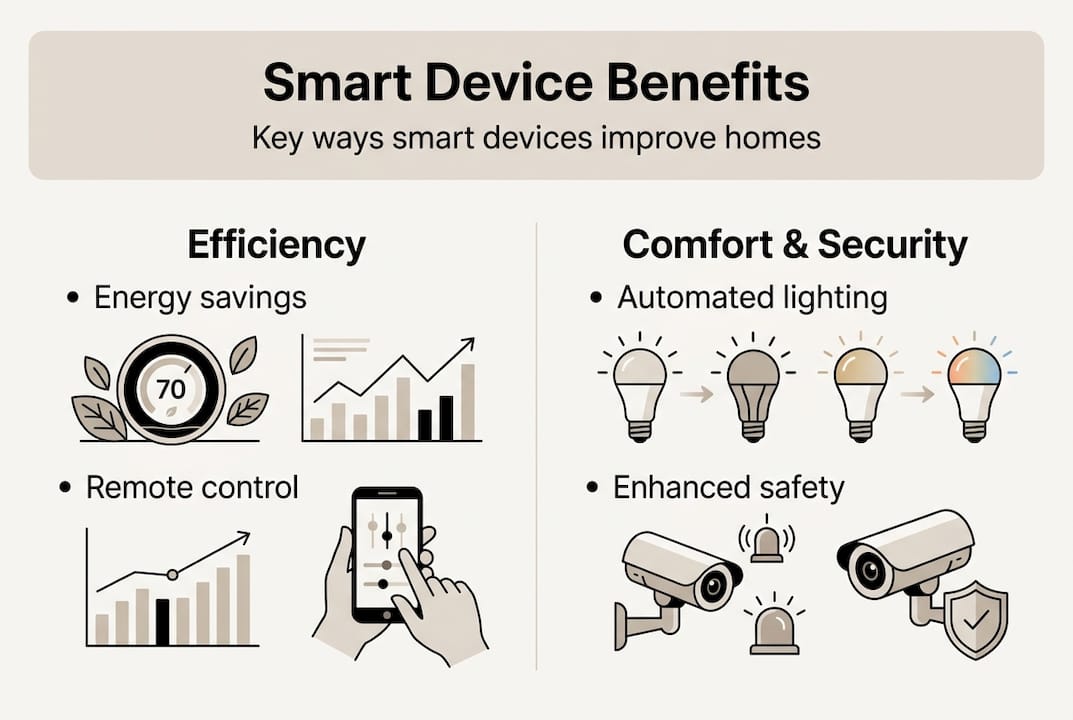
Smart devices are connected gadgets that automate or remotely control everyday home functions. They communicate via WiFi, Bluetooth, Zigbee, or Thread protocols, and most are managed through a smartphone app or a voice assistant. The goal is simple: reduce the effort you put into routine tasks while improving comfort, safety, and efficiency.
Here’s a quick look at the main categories and what each one brings to your home:
- Smart thermostats: Learn your schedule and adjust heating or cooling automatically. Ideal for Greek homes dealing with both hot summers and cold winters.
- Smart lighting: Dimmable, color-adjustable, and schedulable. Set lights to turn off automatically when a room is empty.
- Smart plugs: Turn any appliance into a connected device. Monitor standby power and cut it remotely.
- Security cameras and doorbells: Live video feeds, motion alerts, and two-way audio. Great for apartments and standalone homes alike.
- Voice assistants: Control everything hands-free. Google Assistant leads in Greece due to its native language support for Greek speakers.
Here’s a simple comparison to help you prioritize:
| Device type | Primary benefit | Best for |
|---|---|---|
| Smart thermostat | Energy savings | Homes with central heating/AC |
| Smart lighting | Convenience + savings | Every room |
| Smart plug | Standby power control | TVs, chargers, appliances |
| Security camera | Safety and monitoring | Entrances, yards |
| Voice assistant | Whole-home control | Tech-comfortable users |
For a broader look at your options, check out this guide on types of smart home devices to see what fits your lifestyle. And if you want to go further, this resource on enhancing your smart home covers practical setup steps for Greek households.
The key takeaway here is that smart devices aren’t one-size-fits-all. The right combination depends on your home’s layout, your daily habits, and your priorities, whether that’s comfort, savings, or security.
Energy savings and efficiency: The data and how it applies in Greece
With an overview of smart device categories, let’s examine the exact energy impact, backed by data from Greek homes and international studies.
The numbers are clear. Smart thermostats alone can deliver 10–17% savings on heating and cooling costs, translating to roughly $131–$145 per year for an average household. In Greece, where summer air conditioning runs for months and heating bills spike in winter, those savings add up fast. And when you layer in smart lighting and plugs, Greek homes can cut energy use by up to 23%.
| Smart device | Estimated annual savings | Key mechanism |
|---|---|---|
| Smart thermostat | $131–$145 | Schedule-based temperature control |
| Smart lighting | 10–15% on lighting bills | Auto-off, dimming |
| Smart plugs | 5–10% on appliance use | Standby power elimination |
But Greek homes come with specific challenges. Thick stone or concrete walls are common, especially in older buildings and island properties. These walls block WiFi signals, which causes smart devices to disconnect or respond slowly. The solution is a mesh network, a system of multiple router nodes that blanket your home in strong, consistent WiFi. Thread-based devices (like those in the Matter ecosystem) are also worth considering since they create their own low-power mesh network independent of your router.
Statistic callout: Homes using a combination of smart thermostats, plugs, and lighting see up to 23% lower energy consumption compared to conventionally managed homes in Greece.
Another hidden issue is standby power. Some smart devices draw power even when idle, which can quietly eat into your savings. Always check the product specs before buying.
Pro Tip: Look for smart plugs with built-in energy monitoring. They let you see exactly how much power each appliance draws, including in standby mode, so you can make smarter decisions about what to leave plugged in.
For more detail on real-world results in Greek homes, this breakdown on Greek home energy savings is worth reading before you buy.
Balancing convenience, security, and privacy
Savings and comfort are compelling, but what about privacy and security? Here’s how to weigh these trade-offs intelligently.
Smart devices make life easier, no question. But they also introduce new vulnerabilities. Any device connected to your home network is a potential entry point for hackers if it’s not properly secured. Hacking risks are real, especially through unsecured WiFi networks or devices with default passwords that were never changed.

There’s also a less obvious risk. Misuse of smart thermostats, like setting them to run constantly or ignoring their learning features, can actually increase your energy bills. 41% of thermostat users in some studies saw higher energy use when they didn’t configure their devices properly.
Here’s how to protect yourself:
- Separate your IoT network: Create a dedicated WiFi network just for smart devices. This keeps them isolated from your computers and phones.
- Change default passwords immediately: Every device ships with a generic password. Change it on day one.
- Keep firmware updated: Manufacturers release security patches regularly. Enable automatic updates wherever possible.
- Choose local control options: Devices that work without a constant cloud connection are harder to exploit remotely.
- Disable unused features: If your camera doesn’t need remote access, turn it off.
The smart home advantages are real, but they come with responsibility. A few simple habits protect your home and your data without limiting what your devices can do.
Pro Tip: Use a password manager to generate and store unique, strong passwords for every smart device. It takes five minutes to set up and dramatically reduces your risk exposure.
Getting the most from your smart devices: Practical application in Greek homes
Finally, let’s translate what you’ve learned into practical steps for your own smart home upgrade.
Planning matters more than people realize. Buying devices impulsively and hoping they work together is the most common mistake Greek homeowners make. Here’s a step-by-step approach that actually works:
- Audit your home first. Identify the biggest energy drains and the most repetitive daily tasks. Start with the devices that address those directly.
- Choose a primary ecosystem. Google Home, Amazon Alexa, or Apple HomeKit. Pick one and stick to it for better integration. For Greek language support, Google Assistant is the strongest option.
- Test your WiFi coverage. Walk through every room with your phone and note where the signal drops. If you have dead zones, install a mesh network before adding smart devices.
- Check standby power ratings. Any device drawing more than 0.5W in standby can offset your savings over time. Look for this spec in product listings.
- Start small, then expand. One smart thermostat and a few smart plugs is a solid first step. Add lighting and cameras once you’re comfortable with the ecosystem.
- Consider local control. Platforms like Home Assistant cut latency and reduce cloud dependency, which matters in areas with unstable internet connections.
Avoid cloud-only devices if your internet connection is unreliable. When the cloud goes down, so does your device. Local control keeps everything running even during outages.
Pro Tip: Before buying any smart device, search for its compatibility with your chosen ecosystem. A quick check saves hours of frustration and potential returns.
For a curated list of what works best in Greek homes, this guide on choosing the best smart gadgets is a great starting point.
Expert insight: What most homeowners miss about smart devices
Having covered the practical side, here’s an insider viewpoint most guides skip.
Most smart home content focuses on the flashiest features: voice control, colorful lights, animated dashboards. But in our experience working with Greek homeowners, the biggest wins come from the least glamorous decisions.
Cloud-first devices sound impressive until your internet goes down or the manufacturer discontinues the service. Local control platforms like Home Assistant give you full control without depending on a third-party server. That’s not just a convenience issue, it’s a long-term reliability issue.
Mesh networking is similarly underrated. Greek homes with thick walls need it, not as an optional upgrade but as a foundation. Without it, even the best smart devices underperform.
And standby power is the silent savings killer. People install smart plugs to save energy, then forget that the plug itself draws power. Net savings can disappear if you’re not paying attention to the specs.
Our honest recommendation: ignore the hype, focus on integration and real-world performance. A well-configured practical smart home with basic devices outperforms a poorly planned setup full of premium gadgets every single time.
Enhance your home with trusted smart devices
Ready to take the next step? At AskNik.gr, we’ve curated a selection of smart devices chosen specifically with Greek homeowners in mind. From energy-saving plugs and thermostats to connected kitchen tools, every product goes through a quality check before it reaches you.
Our team is here to help you choose the right devices for your home, whether you’re starting from scratch or expanding an existing setup. Browse our full range of smart home solutions or explore our popular kitchen smart devices for connected cooking upgrades. Free shipping, secure payments, and real support from people who know the products.
Frequently asked questions
How do smart devices save energy in Greek homes?
Smart thermostats, lighting, and plugs optimize power use automatically, delivering 10–17% savings on heating and cooling, with Greek homes reaching up to 23% reduction when multiple devices are combined.
Are smart devices secure or do they pose risks?
Hacking risks exist for any unsecured connected device, but separating your IoT network and using strong, unique passwords significantly reduces your exposure.
How can thick walls and poor WiFi in Greek homes be overcome?
Mesh networking systems and Thread-based devices are the most effective solutions for improving smart device performance in homes with thick walls and weak wireless coverage.
Does standby power use by smart devices matter?
Absolutely. Devices drawing more than 0.5W in standby can quietly offset your energy savings, so always review the standby power specs before purchasing.
Is Google Assistant favored for Greek language support?
Yes. Consumer research confirms that Greek users prefer Google Assistant for its strong native language integration compared to other voice assistant platforms.