
TL;DR:
- Connected kitchenware can sense, communicate, and be controlled remotely, unlike simple smart devices.
- These tools improve cooking with automation, remote monitoring, and error prevention, saving time.
- Building a system of interconnected devices enhances real-world cooking efficiency and convenience.
Not every kitchen gadget with an app qualifies as truly “connected” kitchenware. Many home cooks in Greece are upgrading their kitchens with tech-driven tools, but the line between a programmable appliance and a genuinely connected device often gets blurry. This guide cuts through the noise. We’ll clarify exactly what connected kitchenware means, why it matters for your everyday cooking, and how it can actually save you time and prevent costly mistakes. Whether you’re curious about smart ovens, connected scales, or app-linked coffee makers, by the end of this guide you’ll know what to look for and what to skip.
Table of Contents
- Defining connected kitchenware: More than just smart gadgets
- The real impact: How connectivity transforms your cooking
- Popular connected kitchenware options compared
- Getting started: Tips for choosing and using connected kitchenware
- Why treating connected kitchenware as an ecosystem unlocks true value
- Explore top connected kitchenware for your Greek kitchen
- Frequently asked questions
Key Takeaways
| Point | Details |
|---|---|
| True connectivity explained | Connected kitchenware doesn’t just have an app—it automates, interacts, and adds real value. |
| Daily cooking benefits | Smart kitchenware helps you save time, avoid mistakes, and coordinate complex meals more easily. |
| Choose with purpose | Prioritize interoperability and features that match your cooking style, not just novelty. |
| System thinking wins | Using connected devices as a workflow ecosystem, not one-off gadgets, maximizes results. |
Defining connected kitchenware: More than just smart gadgets
The word “smart” gets thrown around a lot in the kitchen appliance world. A programmable coffee maker that brews at 7 a.m. is clever, sure. But is it truly connected? Not quite. The distinction matters more than most people realize.
Connected kitchenware refers to tools that can sense, communicate, and be controlled over a digital network such as Wi-Fi or Bluetooth. That network connection is what separates them from standard “smart” appliances. A programmable device follows a preset schedule. A connected device responds dynamically, sends you updates, syncs with other tools, and can often be controlled remotely from your phone.
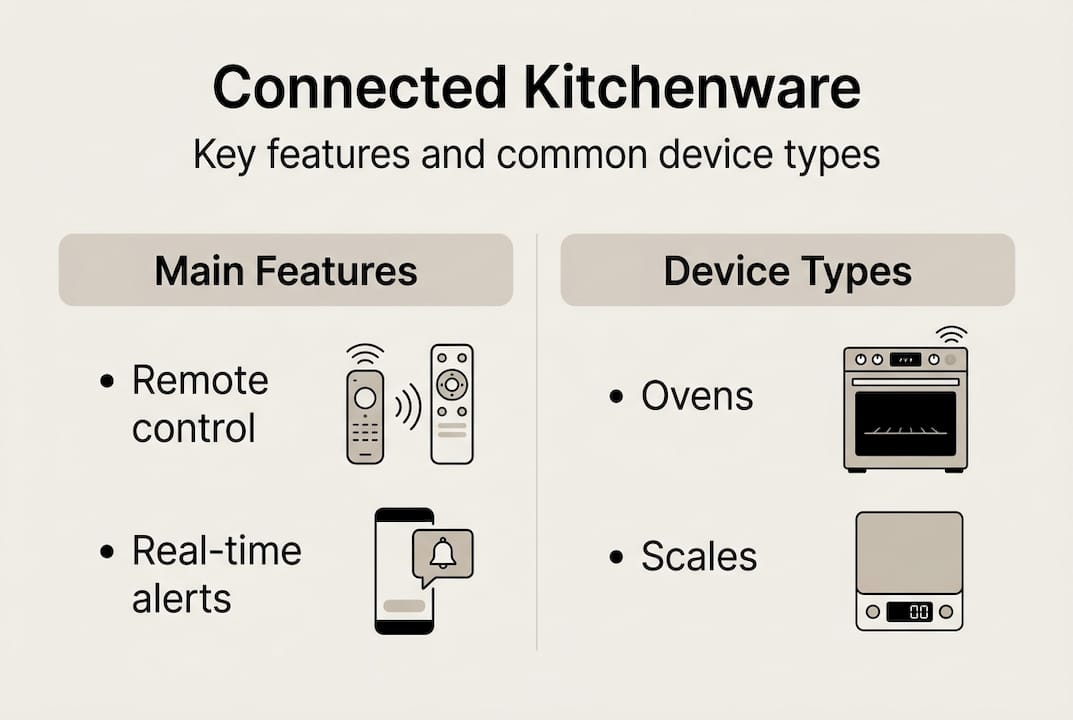
Think of it this way: a programmable oven turns on at a set time. A connected oven lets you change the temperature from your living room, alerts you when the food reaches the right internal temperature, and can even pull a recipe directly into its settings.
Core features that define connected kitchenware include:
- Sensing: The device gathers real-time data, like temperature, weight, or cook time.
- Communication: It sends and receives information via an app, voice assistant, or other devices.
- Automation: It can adjust settings on its own based on what it senses.
- Interoperability: It can work with other devices or platforms, such as Google Home or Amazon Alexa.
- App interface: You can monitor and control it remotely through a smartphone or tablet.
That said, not every connected device offers the full package. Some are purely app-controlled without true automation. Others sense data but don’t communicate it anywhere useful. It’s worth checking the specific features before buying.
“Connected kitchenware refers to tools that can sense, communicate, and/or be controlled over a digital network.” This is the benchmark worth measuring every purchase against.
Common examples of connected kitchenware include smart ovens with built-in cameras, Wi-Fi-enabled kitchen scales, Bluetooth-connected coffee makers, smart multicookers that download recipes, and refrigerators with internal cameras you can check from the grocery store. For a broader look at the category, our guide to smart kitchenware covers the full landscape in detail.
The real impact: How connectivity transforms your cooking
Knowing what connected kitchenware is only gets you so far. The real question is: does it actually make cooking better? The honest answer is yes, but only when you use the right features.
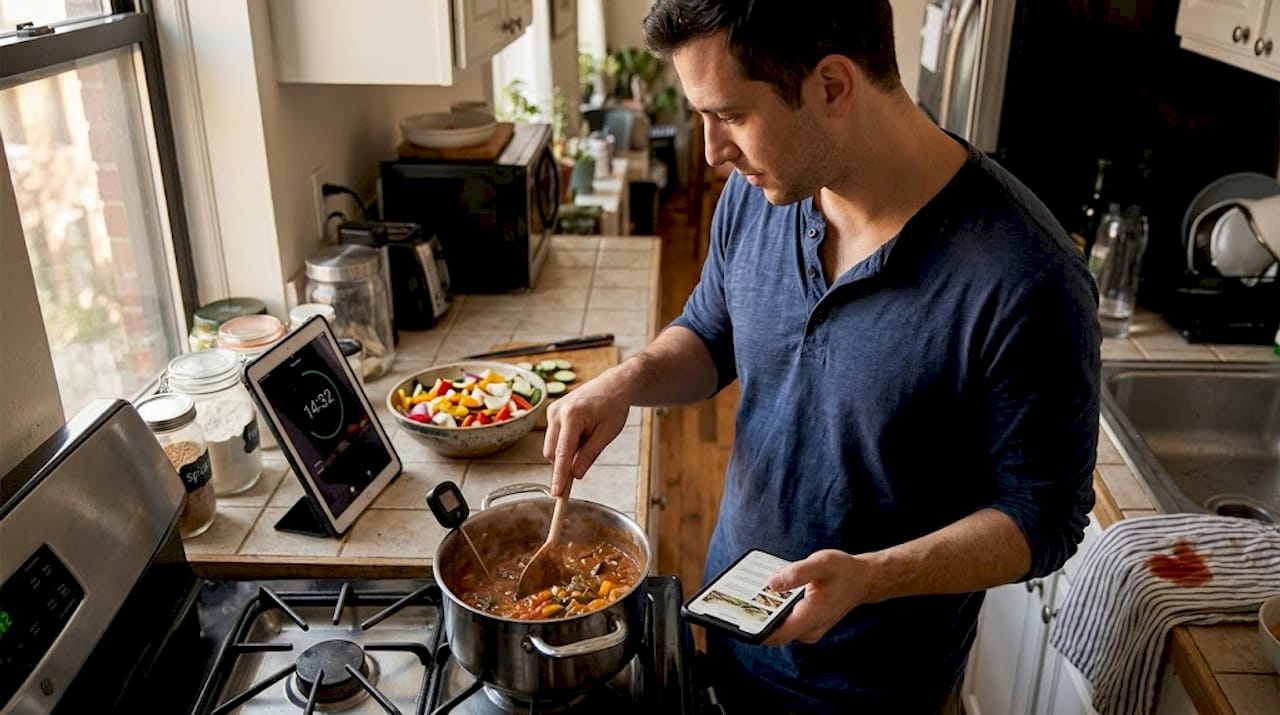
Automating parts of the process and monitoring dishes remotely is where connected kitchenware delivers genuine value. It’s not about having a futuristic kitchen. It’s about reducing the mental load of cooking, especially when you’re juggling multiple dishes.
Here’s what changes in practice:
- Hands-free monitoring: Your oven sends a notification when your roast hits the target temperature. You don’t have to hover.
- Precision automation: A smart scale adjusts your recipe quantities in real time as you add ingredients, so you never over-season a dish again.
- Remote control: Start your kettle from the bedroom so your tea is ready when you walk into the kitchen.
- Recipe sync: Some connected ovens and multicookers download cooking programs directly from your preferred recipe app, removing guesswork.
- Error prevention: Automated shutoff features and temperature alerts stop overcooking before it happens.
For home cooks handling big Greek family meals, that kind of support is genuinely useful. Cooking moussaka while managing a salad, bread, and dessert all at once becomes significantly less stressful when devices communicate and alert you automatically.
The real value of connected kitchenware is practical time-saving and error-proofing your meals, not the novelty of having an app.
Pro Tip: During busy meal prep, use your connected oven’s app to monitor oven temperature from another room while you prep ingredients at the counter. This frees up your attention without sacrificing precision.
For ideas on building an efficient routine, explore our smart kitchen workflow tips to see how connectivity fits into a streamlined daily cooking process.
Popular connected kitchenware options compared
With so many devices on the market, it helps to see them side by side. Here’s a practical comparison of the most common connected kitchenware types.
| Device type | Main functions | Connectivity | Best for | Limitations |
|---|---|---|---|---|
| Smart oven | Remote control, temperature monitoring, recipe download | Wi-Fi | Precision roasting, baking | High cost, requires stable Wi-Fi |
| Connected scale | Real-time weight, recipe scaling | Bluetooth | Baking, portion control | Limited app ecosystems |
| Smart coffee maker | Scheduled brewing, remote start | Wi-Fi/Bluetooth | Morning routines | Basic automation only |
| Smart multicooker | Automated programs, recipe sync | Wi-Fi | Soups, stews, meal prep | Brand-specific app required |
| Smart refrigerator | Internal cameras, inventory tracking | Wi-Fi | Grocery planning | Very high price point |
As you can see, full automation is most common in smart ovens and multicookers. Coffee makers and scales tend to offer remote control rather than deep automation. Refrigerators are impressive but expensive for most households.
It’s also important to note that not all devices interoperate. If you buy a smart oven from one brand and a connected scale from another, they may not communicate with each other, limiting how much you can automate.
Before purchasing, consider these points:
- Interoperability: Does this device work with your existing smart home setup or other kitchen gadgets?
- App quality and support: Is the companion app regularly updated and well-reviewed?
- Local availability in Greece: Can you get firmware updates, customer support, and replacement parts locally?
- Wi-Fi band compatibility: Many smart appliances still run on 2.4 GHz, so check your router settings.
- Automation depth: Is it truly automated or just remotely controlled via an app?
For a broader look at practical options, check out our streamlined kitchen gadget ideas for curated picks.
Getting started: Tips for choosing and using connected kitchenware
Once you’ve decided to invest in connected kitchenware, the practical steps matter as much as the product choice. Here’s how to introduce it into your kitchen without unnecessary friction.
Start with one device that solves a real problem you already have. If you consistently overcook meat, a smart thermometer or connected oven is a logical first step. If you struggle with baking consistency, a connected scale is a better entry point. Don’t buy multiple devices at once and expect them to work together seamlessly right away.
Here are the key features worth prioritizing when evaluating options:
| Feature | Why it matters | Example device |
|---|---|---|
| Automation | Reduces manual steps during cooking | Smart multicooker |
| Remote control | Lets you monitor from anywhere | Wi-Fi oven |
| Recipe integration | Pulls cooking settings automatically | Connected oven |
| Local support | Easier troubleshooting in Greece | Locally stocked brands |
| Multi-device sync | Enables coordinated workflows | Smart home ecosystems |
Real connectivity should improve your specific cooking day-to-day, not just add steps. If a feature doesn’t solve a problem you actually have, it’s not worth paying for.
Pro Tip: Always update your device’s firmware immediately after setup. Manufacturers regularly push improvements that fix connectivity bugs and add new features. Also, check that your home Wi-Fi password is up to date on every connected device after any router changes.
Creative ways to use connectivity beyond the basics:
- Share a connected shopping list between family members that automatically updates when smart fridge inventory changes.
- Use a connected scale’s app to track nutritional data across weekly meals.
- Enable remote cooking support by letting a family member access your smart oven’s app to help guide a recipe.
- Set automated cooking programs for traditional Greek dishes so anyone in the household can start them correctly.
For more ideas on building a future-ready setup, visit our kitchen upgrade tech tips or browse our dedicated 2026 smart kitchen guide.
Why treating connected kitchenware as an ecosystem unlocks true value
Here’s something most buying guides won’t tell you: a single connected device rarely changes your cooking in a meaningful way. The real gains come when you start thinking in systems.
Functionality can be limited when each gadget operates as a standalone tool rather than part of a coordinated workflow. We see this pattern regularly. Someone buys a connected oven, uses it like a regular oven with a fancy app, and wonders why the investment didn’t feel worth it.
The shift happens when devices talk to each other. Imagine this: your smart scale detects you’ve portioned the correct amount of chicken. It passes that weight data to your recipe app, which automatically sets the cook time on your connected oven. You’re alerted when the dish is done, and your smart kitchen timer starts counting down a 5-minute rest period. That’s not science fiction. That’s what the ecosystem approach makes possible today.
Our advice is simple. Map out the two or three biggest friction points in your cooking routine. Then find connected devices that solve those specific problems and check whether they can work together. Use your smart kitchen system tips as your planning framework. Think in systems, and the investment pays off quickly.
Explore top connected kitchenware for your Greek kitchen
If you’re ready to take the next step, we’ve made it easy to find the right tools for your kitchen. At AskNik.gr, we curate connected kitchenware that’s tested, quality-checked, and available with fast shipping across Greece.

Browse our connected kitchenware essentials in English, or explore our Greek collection of κουζινικά είδη και gadgets for locally relevant picks. You’ll find smart scales, connected ovens, Wi-Fi coffee makers, and more, all in one place. Not sure where to start? Head to Asknik home and use our categories to navigate by function. Free shipping and exclusive offers are always included.
Frequently asked questions
What makes kitchenware ‘connected’ and not just smart?
Connected kitchenware can sense, communicate, and be controlled over a digital network, going well beyond basic programmability to enable remote control and automation.
Do connected kitchenware devices save time in daily cooking?
Yes. Automating cooking tasks and monitoring dishes remotely are the core time-saving benefits, cutting down on both active kitchen time and the risk of errors.
Is it necessary to buy all devices from one brand for interoperability?
No, but same-brand ecosystems typically offer smoother coordination. Mixing brands can reduce available automated features and may require manual workarounds.
Are connected kitchen devices available for Greek households?
Absolutely. Many connected kitchen gadgets and appliances are available through online stores like AskNik.gr, which offers fast delivery and local support throughout Greece.